

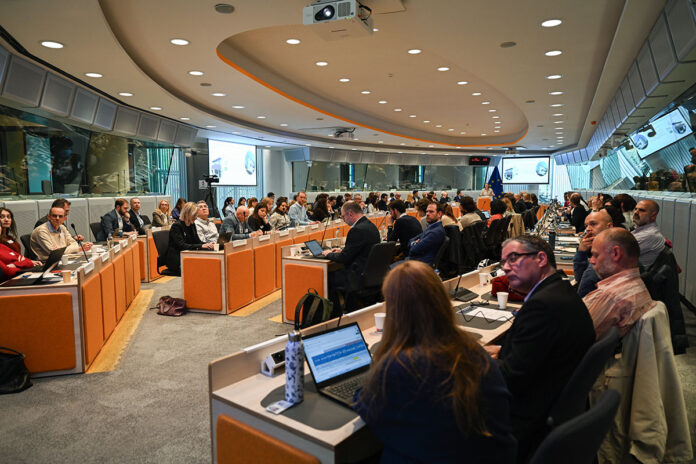
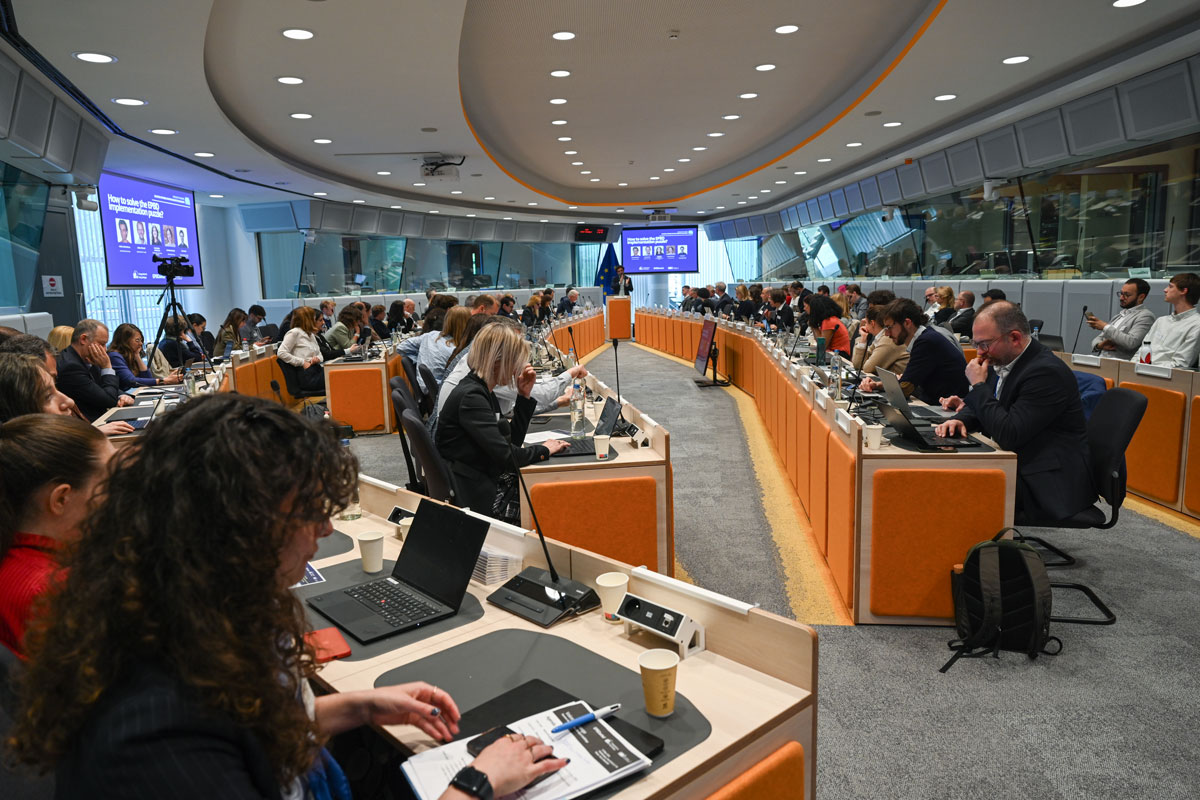
Europe’s building policy is shifting from concepts to concrete action, and façades sit at the centre of that shift. On 12 May 2026, Facade Today attended the “Voices of Change” conference in Brussels to capture this policy momentum first‑hand and translate it for façade and building professionals. From the EU Commission, the event offered a clear message: implementation has started, and our industry must move fast to align with 2030 and 2050 targets *.
(*) In 2023, the EU adopted a set of Commission proposals to make the EU’s climate, energy, transport and taxation policies fit for reducing net greenhouse gas emissions by at least 55% by 2030, compared to 1990 levels. This will enable the EU to become the first climate-neutral continent by 2050.
From climate tracker to implementation pressure
The event closed the EPBD.wise project and gathered stories from ten Member States. It opened with Oliver Rapf, Executive Director, BPIE, who presented insights from the EU Buildings Climate Tracker. This tool monitors how quickly the EU building stock moves toward full decarbonisation by 2050 and shows that progress is still off track. Rapf stressed the need for a clear, common framework, in which the EPBD is central, so that national policies and local projects can finally move in the same direction.
For façade and building professionals, that framework is no abstraction. It will shape renovation roadmaps, performance requirements and investment flows for years to come. Those who understand the EPBD early will shape the solutions others later adopt.
Buildings as strategic energy assets
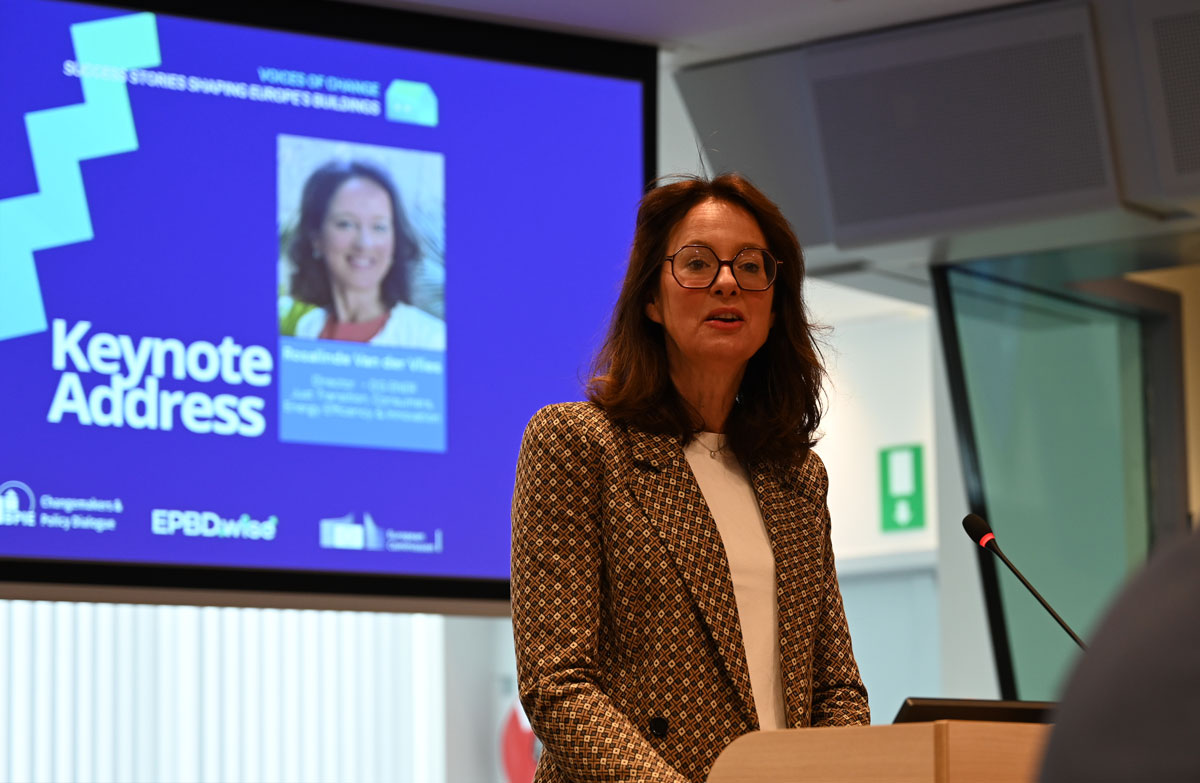
Rosalinde van der Vlies, Director at DG Energy, made the political context very explicit. She called for a doubling of effort and described buildings as strategic assets for energy independence, not just passive consumers. The good news: the technologies are available. The challenge: they must be deployed at scale, with everyone at the table.
She presented “Accelerate EU” as the roadmap and underlined the role of the revised Energy Performance of Buildings Directive (EPBD). The EPBD has been designed as a flexible framework for Member States. Implementation, she said, must remain pragmatic and cost‑effective, but it is no longer optional. For our sector, this means façade solutions that are not only innovative, but demonstrably compliant and scalable inside the EPBD framework.
EPBD as main tool for national renovation decisions
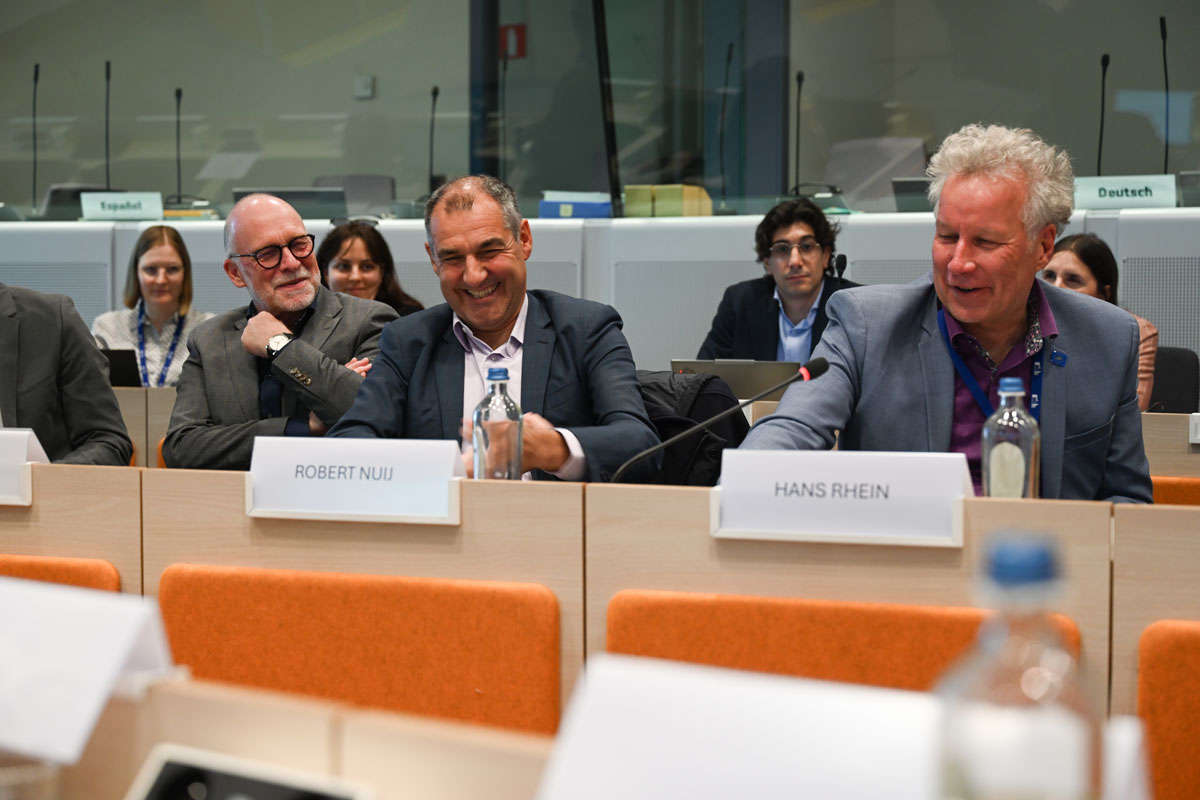
Robert Nuij, Head of Unit at DG Energy, described the EPBD as the main tool for Member States to decide how they will renovate their building stock. It guides priorities, financing and the trajectory toward the 2030 and 2050 objectives. Several instruments sit under this EPBD umbrella: building renovation passports, certificates, assessments and national renovation plans.
Nuij stressed that this is the moment to move from policy concepts to implementation. The Commission will need to engage locally, so national realities are respected and flexibility is preserved. That local engagement is where façade engineers, architects and contractors will feel the pressure most directly. Implementation happens at project level, on actual envelopes.
When asked how the European building stock might look in five years, Nuij pointed to a tension. Energy systems struggle because so many stakeholders act at different levels. Yet the recent energy crisis increased interest in energy independence and resilience. He sees a market response already, for instance in the growing uptake of heat pumps. He also reminded the audience that 99% of construction happens in small cities, often with low levels of innovation. This is where most façades are designed, specified and built.
One‑stop‑shops and a construction “revolution”
Hans Rhein from CINEA focused on implementation on the ground. He presented examples of one‑stop‑shops for residential renovations. These centres help households navigate technical choices, financing and execution. For him, the key is partnership between regions, cities and industries, with a clear wish to replicate best practices and scale them up.
Rhein highlighted that more than 50,000 people have already been trained under related programmes. Knowledge is accumulating, guidance is spreading and the next step, in his view, is a real revolution in the construction sector to roll out existing innovations at scale. For façade specialists, that means bringing advanced façade systems, components and methods into mainstream practice, not keeping them at pilot level.
Innovative approaches in an EPBD‑driven market: data, passports and local realities
Lukas Kranzl from TU Wien, coordinator of EPBD.wise, turned to the National Building Renovation Plans. These plans must set out how each Member State will transform its building stock into a highly energy‑efficient and decarbonised stock by 2050, with intermediate milestones under the EPBD. To do that, reliable and high‑quality data are essential. Data sources differ widely between countries, and instruments must reflect national realities. A country with coal‑heavy heat supply faces very different constraints from one relying mainly on gas.
Susanne Geissler from SERA Global then focused on renovation passports. These passports can connect building‑level strategies with long‑term national goals defined by the EPBD. For façade professionals, renovation passports create a structured space where envelope upgrades can be planned over time, tied to performance milestones and funding opportunities.
The EPBD as the main tool for national renovation decisions
The national examples were revealing. In Poland, the National Fund for Environmental Protection and Water Management (Marta Babicz) has actively promoted renovation by building trust through hundreds of cases. Their analysis shows that public grants tend to raise project quality, which then improves overall outcomes for energy performance.
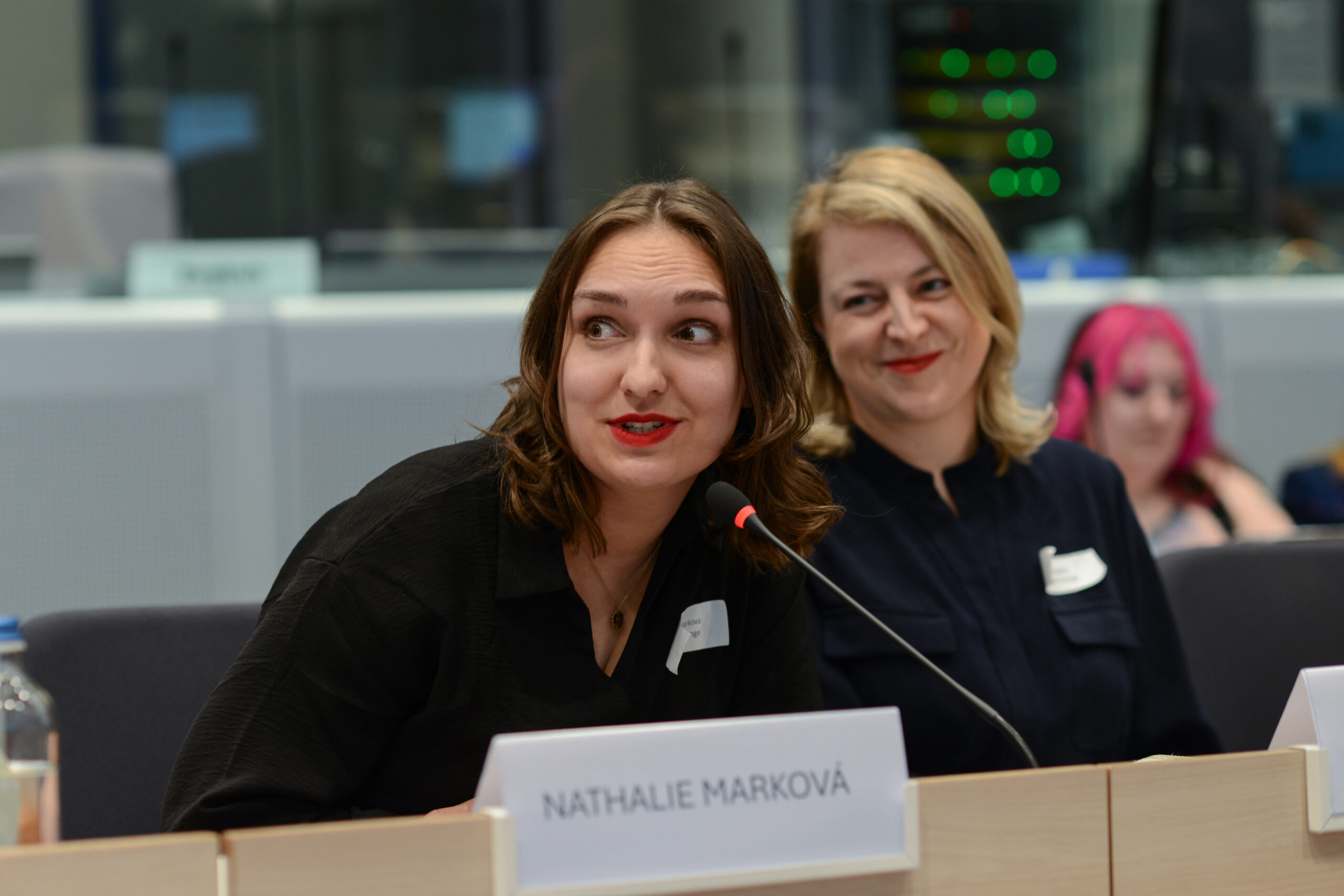
Portugal, by contrast, started with almost no building data. Rui Fragoso from the National Energy Agency explained that authorities chose to build a robust EPC database. Over time this enabled incentives such as lower local taxes linked to renovation performance. A protocol now allows banks to access EPC data, so loan conditions can automatically reflect energy performance. A grant application with an EPC number can trigger interest‑rate adjustments, creating a direct financial signal for better renovation.
Trust, ambassadors and non‑financial benefits
Across the discussions, three themes kept resurfacing. First, new ways of working are being tested, often with strong digital and financial components. Second, local trust is essential. Without trusted intermediaries and visible positive examples, policies stay on paper. Third, changing perceptions across the whole value chain is crucial. This is not just about policymakers, but also about owners, designers, contractors and manufacturers.
Speakers called for “ambassadors” who can translate policy language into practical stories and solutions. The benefits of renovation are not only financial. They also include durability, improved comfort, reduced risk and higher skill levels in the construction and manufacturing sectors.
Trust, ambassadors and non‑financial benefits
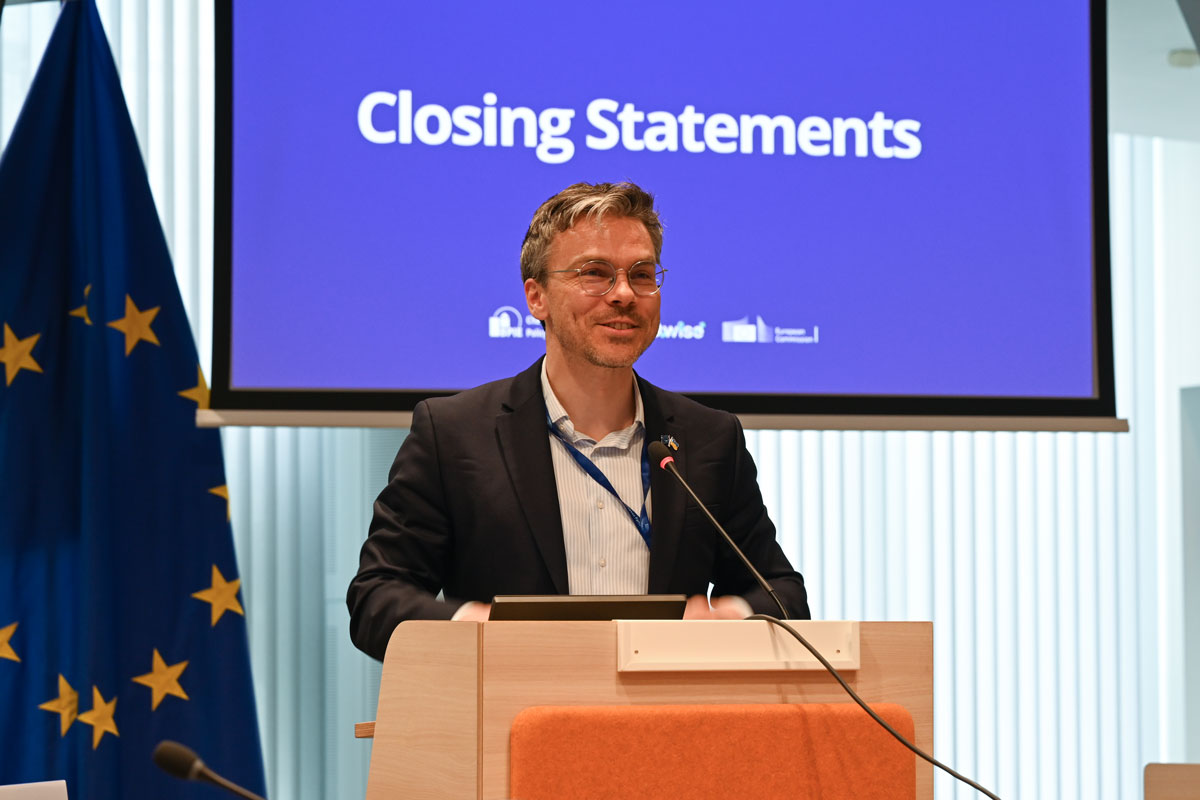
In his closing remarks, Thomas Pellerin‑Carlin, Member of the European Parliament (MEP), reminded the audience that the buildings we inhabit were not designed for today’s world. Energy and even food are now used as geopolitical tools. Europe has now a serious plan for independence, and large‑scale renovation of the building stock is a core part of that plan. Political groups driven by “green” priorities and those focused on “security” have a common interest here and should push together.
From Facade Today’s perspective, one conclusion is unavoidable. The façade industry sits at the intersection of energy, comfort, resilience and urban quality. Façades shape heat demand, solar gains, daylight, durability and embodied impacts. As the EPBD framework moves into implementation, envelope decisions will either enable or block national renovation plans.
For façade and building professionals, this is not only a compliance challenge. It is a chance to lead. By fostering innovation that fits the new EPBD landscape (high‑performance envelopes, smart renovation sequencing, industrialised solutions and skills development) our community can help Europe meet its 2030 and 2050 targets and strengthen its energy independence.
Being based in Brussels gives Facade Today a front‑row view of how these policies, including the EPBD, emerge and evolve. Sharing those signals early with the façade community can help the sector prepare, adapt and influence, rather than simply react once the rules are fixed.
Useful links
Under the EPBD, EU countries must cut energy use in buildings significantly by 2030 and deliver a highly energy‑efficient, near‑zero‑emission building stock by 2050. The resources below give a clear overview of those targets and what they mean in practice for projects and portfolios.
Energy Performance of Buildings Directive (EPBD) – European Commission
National Building Renovation Plans – European Commission
EPBD overview – RICS / Efficient Buildings Europe