


Curved glass has moved from niche statement projects to a realistic option on more façade briefs. As a result, architects now use it to soften corners, create cleaner sightlines, and reduce the visual clutter of faceted geometry. At the same time, fabricators have improved forming techniques, coating options, and dimensional control, so complex shapes are more repeatable and less risky. In parallel, energy and comfort targets push designers to integrate high‑performance coatings, laminates, and insulated units into curved build‑ups rather than treat them as one‑off specials. For developers, curved glass can also differentiate a scheme in crowded city skylines without relying solely on extreme height or cost. As more projects reference successful precedents, client resistance is lowering and expectations are rising. In this context, Facade Today explores where curved glass fundamentally changes the rules for façade engineering, rather than just adding an aesthetic signature.
For façade engineers, curved glass alters almost every familiar assumption from flat curtain walling. To begin with, panel behavior under load, the role of pre‑stress, and post‑breakage performance all need a fresh look. Then, tolerances become tighter at interfaces, especially where curved units meet straight structure or adjacent systems. Fixing strategies must also handle combined geometrical and structural demands, often with less redundancy. Moving from flat to curved is therefore not a simple substitution; it means rethinking design, detailing, and risk management across the whole façade package.
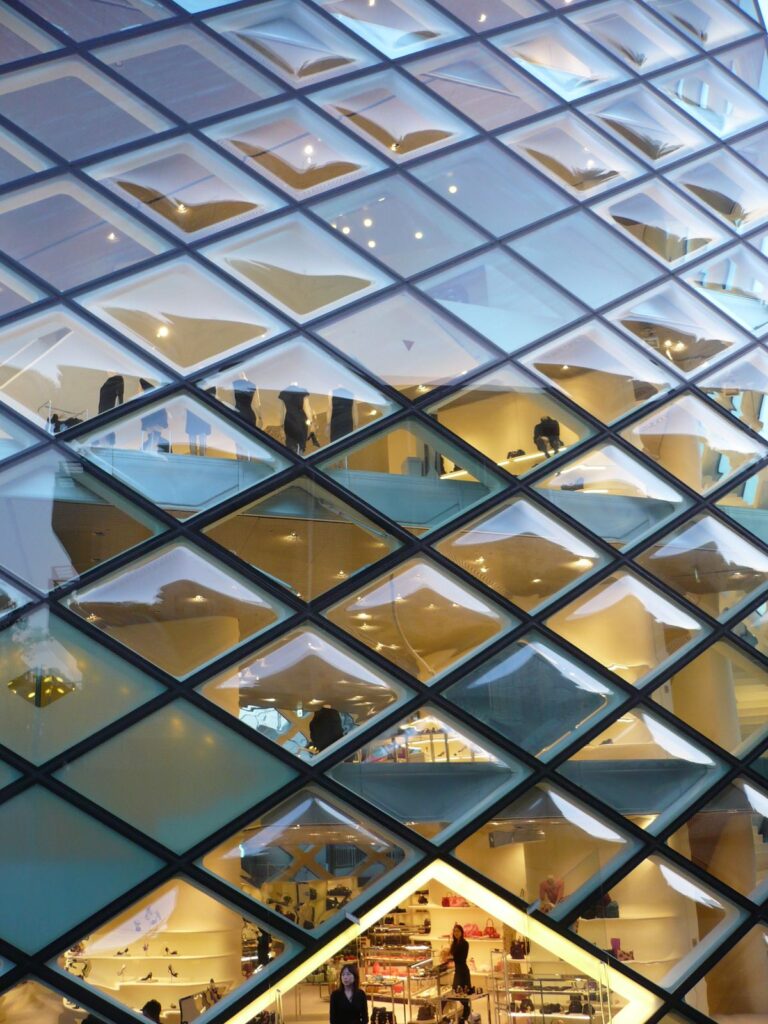
Architects: Herzog & de Meuron
Facade Engineer: Eckelt Glas
Curved glass: CRICURSA | Tvitec Group
Photo: unknown
Designing on a Curve
The Moment Glass Curves, Tolerances Shrink
Curved glass looks spectacular, but it quickly exposes where our geometry and detailing are not robust enough. In this part, we will focus on what really changes for façade engineers once the glass starts to bend.
Geometry, radii, and buildability
The starting point is always geometry. Small changes in radius, chord length, or panel size can make the difference between a feasible panel and one that simply cannot be formed. So you need to define early which radii are compatible with available bending processes and glass thicknesses. Also, try to rationalise: repeating radii and clear families of panels reduce cost, risk, and coordination headaches. In addition, be honest about fabrication limits and transport constraints, because these often define the maximum panel size before anything else. Finally, remember that geometry drives everything: support positions, tolerances, edge cover, drainage paths, and even safe access for installation and future replacement.
Structural behaviour: strength, stiffness, and breakage
Once the geometry is set, the structural behaviour changes compared with flat glass. A curved panel may show increased stiffness in one direction but remain flexible in another. This affects deflections, fixing loads, and comfort criteria under wind or crowd loads. You also need to think carefully about breakage modes. Laminated curved glass behaves differently when a ply fails, and residual load paths can be less intuitive. Local imperfections from bending, such as thickness variation or roller waves, can further influence stress distribution. In practice, this often means project‑specific testing or at least very cautious modelling assumptions. Sometimes, you discover that a slightly adjusted radius or support layout is far more effective than simply increasing thickness.
Edge conditions and fixings: point fixings, frames, and movement
Edges become more critical with curvature. Point fixings must accommodate local bending without creating stress peaks around the holes. Framed systems need gaskets, setting blocks, and profiles that can follow the curve yet still allow drainage and movement. Here, details that worked for flat units can suddenly be unreliable. Therefore, get your suppliers and installers around the table early to validate edge build‑ups, tolerances, and handling constraints.
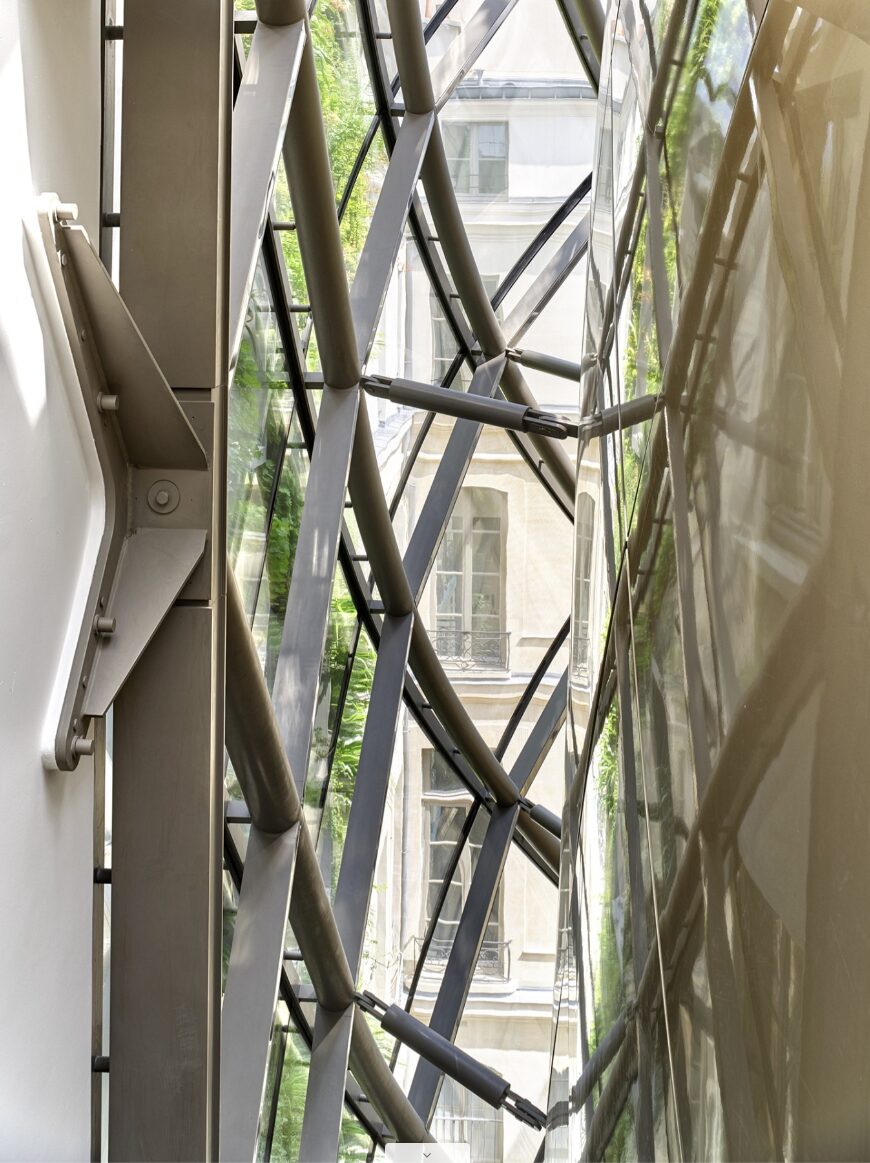
Architects: Moatti-Rivière
Facade Engineer / Contractor: Bellapart Group and RFR Structure et Enveloppe
Curved glass: Sedak GmbH & Co. KG
Image courtesy Moatti-Rivière
Tolerances and interfaces: connecting curved glass to straight structures
Finally, the interface between curved glass and mostly straight primary structure can be unforgiving. You need a realistic tolerance budget that covers bending, fabrication, and site installation. Otherwise, the support steel may not meet the glass, or the silicone bites become inconsistent. In many projects, adjustable brackets and packers are the only way to close this gap.
The Hidden Side of Curved Glass Performance
When Shape Affects Sound and Heat
Curved glass does more than change the look of the façade. It also shifts how thermal, acoustic, and comfort performance behave and are perceived. You may have solved geometry, stiffness, fixings, and tolerances, yet performance in use can still surprise you if you treat curved IGUs as just another glazing option.
From a thermal point of view, curved IGUs follow the same basic rules as flat units, but edge spacing, coating continuity, and gas retention demand even more attention. Therefore, coordination with the glass processor on spacer geometry and bending sequences is crucial.
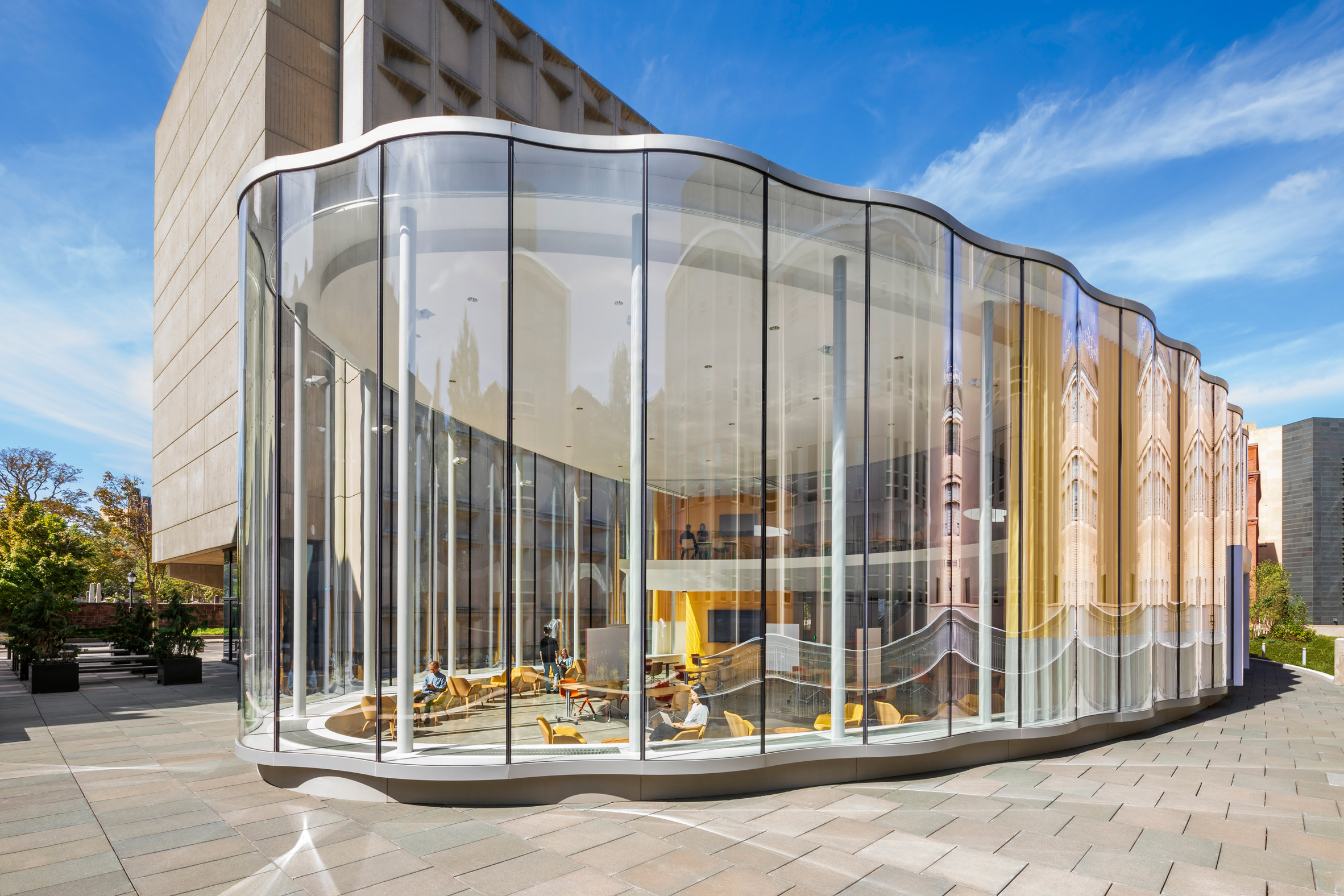
Architects: Weiss/Manfredi
Photo Albert Vecerka
Acoustically, curvature can help break up reflections and reduce flutter, yet it may also create local “hot spots” of noise if panel geometry and joints are not carefully detailed. So, early collaboration with acoustic consultants becomes more important. You will often need to look again at mullion spacing, joint location, and backing walls, because the way sound “slides” over a curved surface is less predictable than over a flat façade. Mock‑ups and lab tests become valuable, not only to check ratings, but also to understand how noise is perceived inside critical spaces.
Finally, comfort is not only about numbers. Curved glass can change how occupants experience reflections, glare, and proximity to the façade. People may feel closer to the outside world, or more exposed, depending on curvature and interior layout. As a result, full‑scale visual mock‑ups, on-site tests, and user feedback are valuable tools before committing to large surfaces. This is where façade engineers and contractors can really add value, by connecting performance models with how the space will actually feel day to day.
From Furnace to Façade
Getting the Process Right
Curved glass demands early collaboration. Fabricators need precise radii, bending limits, and edge finishing details before production begins. Even a few millimetres of deviation can break alignment once the panel meets its frame. So, when designers specify complex geometry, they should confirm what the glass plant can actually achieve. Material thickness, coating type, and curvature method (cold bent, hot bent, or laminated) each dictate different limits. Quality assurance also becomes more critical. Every batch must be checked for optical distortion and residual stress. The best outcomes come from open dialogue between engineer, fabricator, and installer, not from last‑minute design changes.
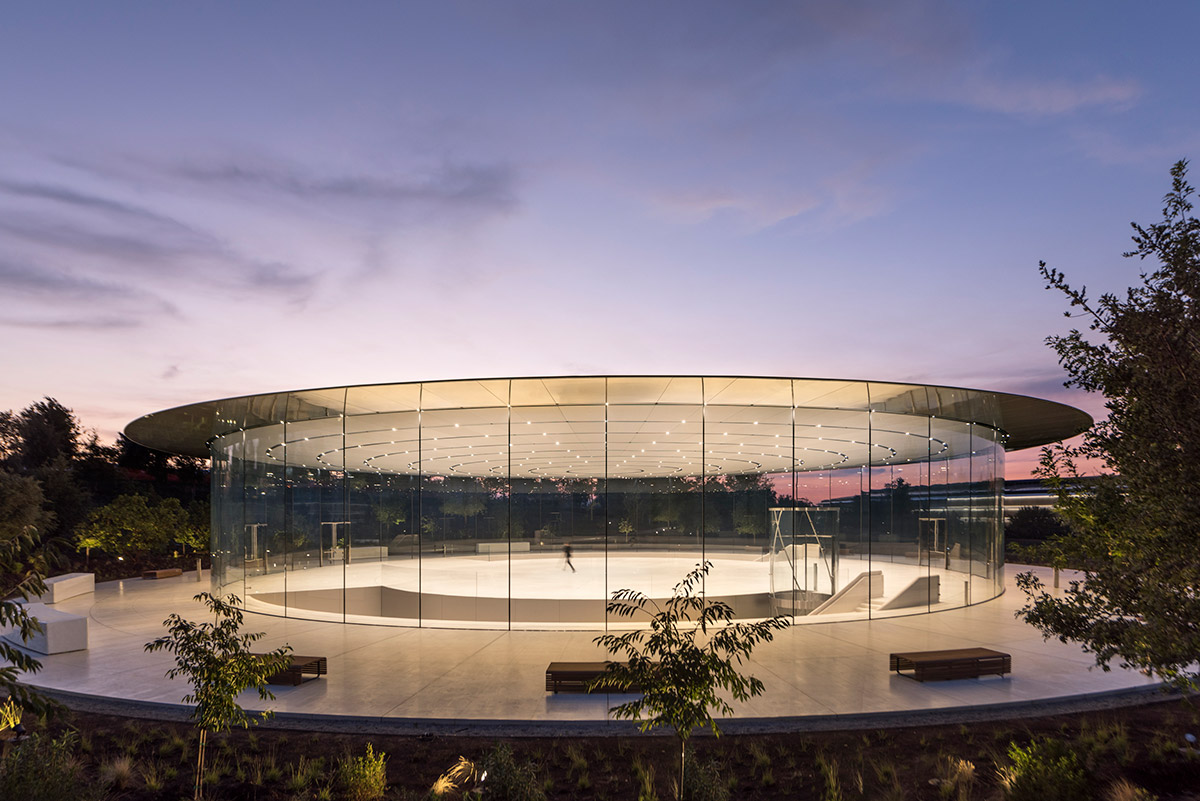
Architects Foster + Partners
Photo Nigel Young
Because each pane carries its own geometry, lifting and placement demand extra care. Therefore, custom cradles, suction frames, and slightly wider clearances are essential. On‑site, every step must flow logically to protect edges, fixings, and supports. With careful sequencing and coordination from experienced professionals, the process runs safer, smoother, and faster.
When Curved Glass Truly Makes Sense
Balancing Desire and Deliverability
We’ve all felt that quiet fascination when a façade bends light into something fluid and alive, seamlessly blending structure with sculpture. Yet, it’s not always the right answer. When geometry serves performance, daylight, or architectural intent, it’s worth every detail. But when cost, tolerance, or installation risks outweigh the benefit, restraint shows real expertise. Engineers know beauty also lies in control. So, use curved glass when the line between design and engineering truly adds value, and when the curve tells a story the façade deserves to express.
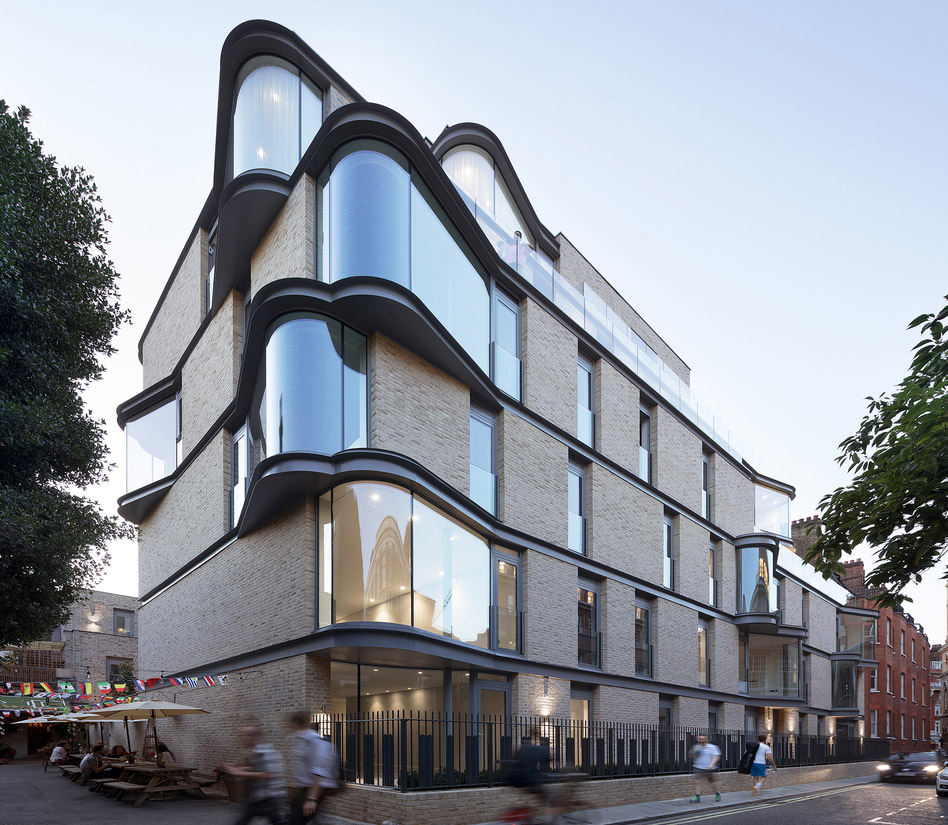
DROO architects and NAME architecture
Photo Naaro
Useful links
Bundesverband Flachglas – BF Bulletin 009 “Guideline on thermally curved glass for building applications”
Modelling of Curved Glass Elements – Cold-Bent Glass and Simplified Models
By Mohamad Baradey, Lund University, 2025
Adrian Lowenstein on Curved Glass, Linkedin
Case studies
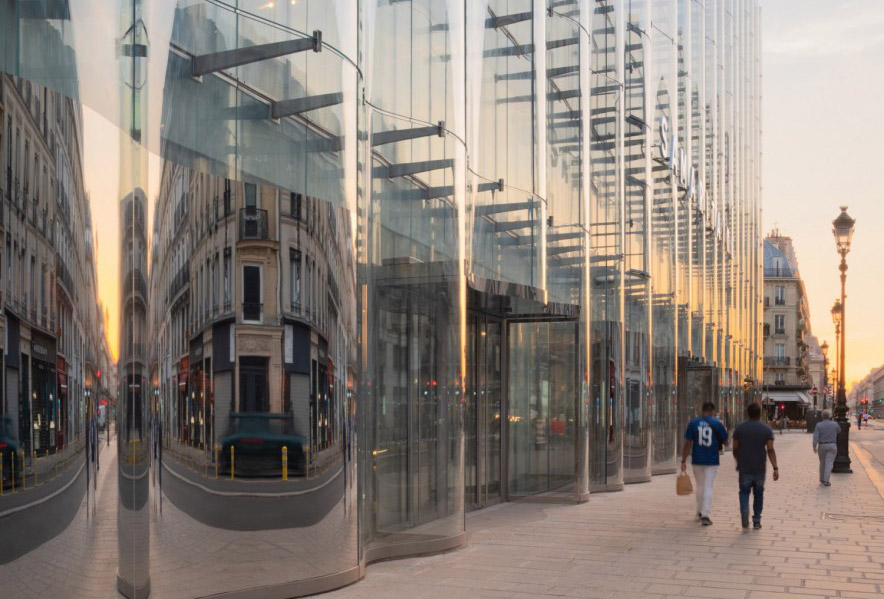
La Samaritaine Department Store, Paris
François Brugel Architectes Associés, LAGNEAU ARCHITECTES, SRA ARCHITECTES, Kazuyo Sejima + Ryue Nishizawa / SANAA
Facade Engineer / Consultant: RFR Structure et Enveloppe
Curved Glass: CRICURSA | Tvitec Group
Photography: Simón García, Jared Chulski
La Samaritaine’s “Façade Ondulée” in Paris reinterprets a historic department store with a fluid, contemporary skin. François Brugel Architectes Associés, LAGNEAU ARCHITECTES, SRA ARCHITECTES, and SANAA (Kazuyo Sejima and Ryue Nishizawa) shaped an undulating glazed surface that softens the street edge and filters light. RFR Structure et Enveloppe engineered the façade, coordinating movements, tolerances, and slender support lines behind the curved glass. CRICURSA and Tvitec Group supplied the thermally formed glass, balancing manufacturable radii, optical quality, and laminated safety performance for large, repeatable curved units.
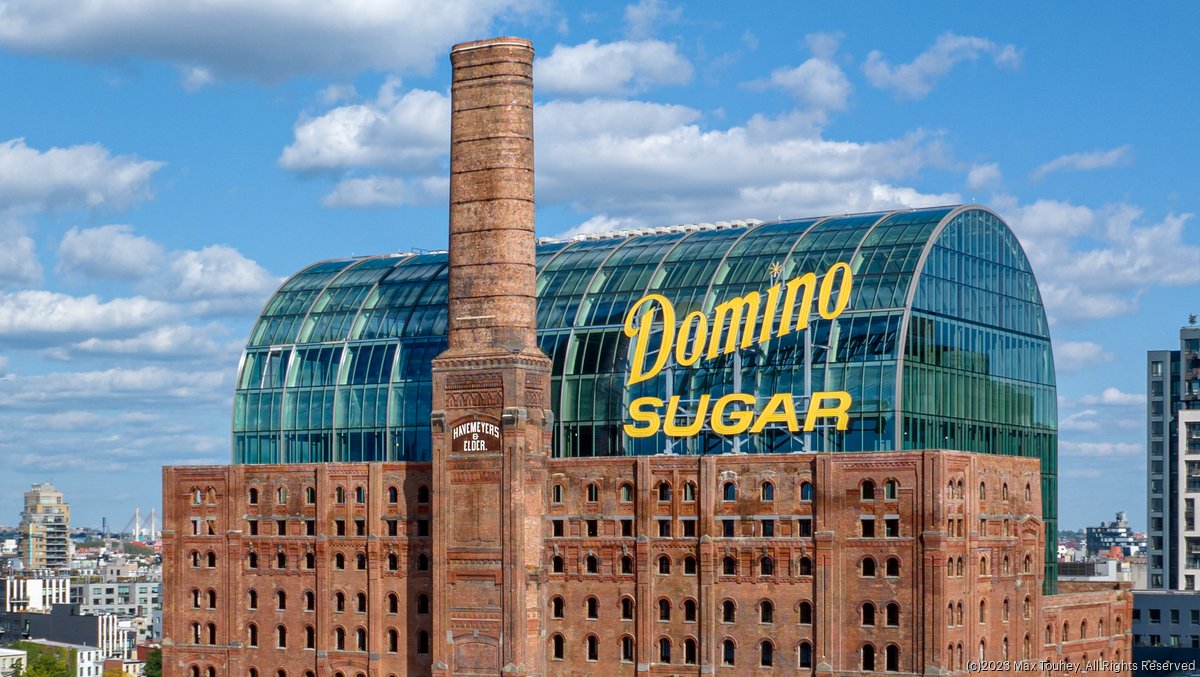
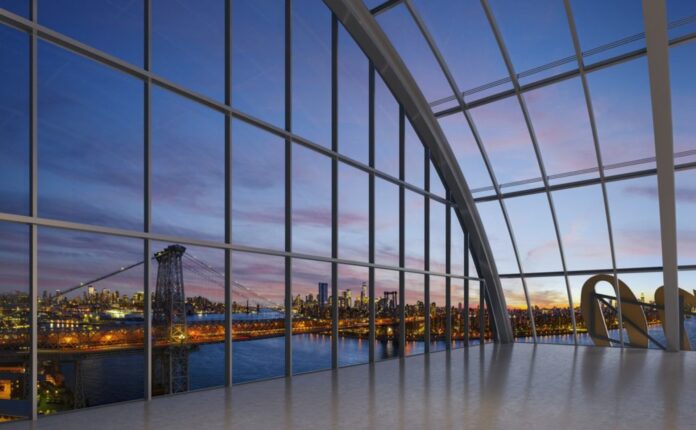
Domino Sugar Refinery, New York
Architects: PAU – Practice for Architecture and Urbanism
Façade Engineer: Focchi Group and MEW (Manfroni Engineering Workshop)
Curved Glass: CRICURSA
Photos: Max Touhey / Rendering courtesy of Two Trees Management
At New York’s Domino Sugar Refinery, PAU – Practice for Architecture and Urbanism transformed an industrial icon into a glazed workplace volume set within the original brick shell. The façade package, engineered by Focchi Group with MEW (Manfroni Engineering Workshop), had to reconcile heritage constraints, large movements, and demanding performance targets. Curved glass by CRICURSA shapes the vaulted interior envelope, requiring tight control of radii, tolerances, and support geometry. Together, these teams delivered a complex façade where curvature, structural logic, and reuse ambitions work as a single architectural story.
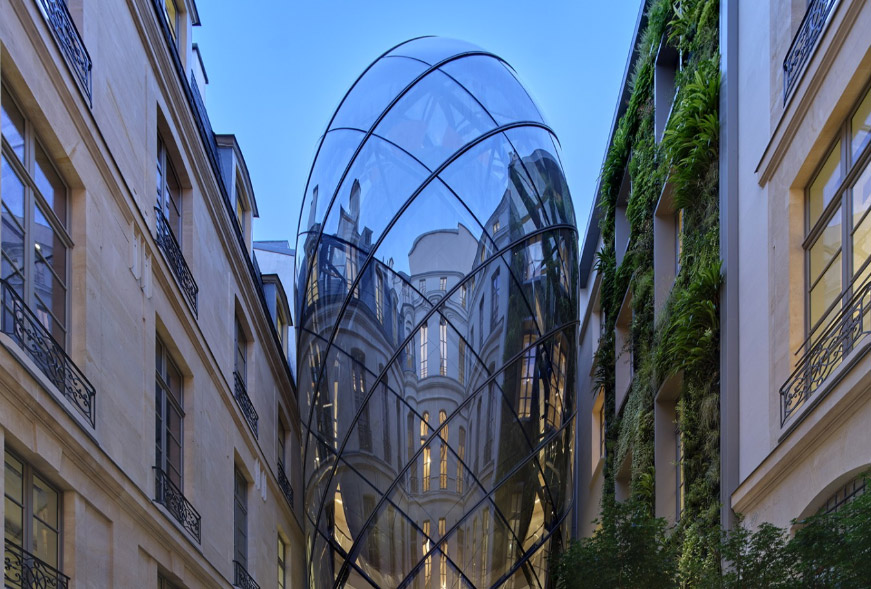
L’Oréal Headquarters – Le Visionnaire – Espace François Dalle, Paris
Architects: Moatti-Rivière
Facade Engineer / Contractor: Bellapart Group and RFR Structure et Enveloppe
Curved glass: Sedak
Photo: Michel Denance
L’Oréal Headquarters – Le Visionnaire – Espace François Dalle in Paris uses curved glass to express transparency and precision in the brand’s identity. Moatti-Rivière-Rivière shaped a fluid envelope that wraps the volume with continuous glazed curves. Bellapart Group and RFR Structure et Enveloppe engineered and delivered the façade, managing complex geometry, support steel, and tight tolerances. Sedak supplied large curved glass units with high optical quality, structural performance, and integrated coatings. Together, they turned a demanding geometry into a controlled façade system.
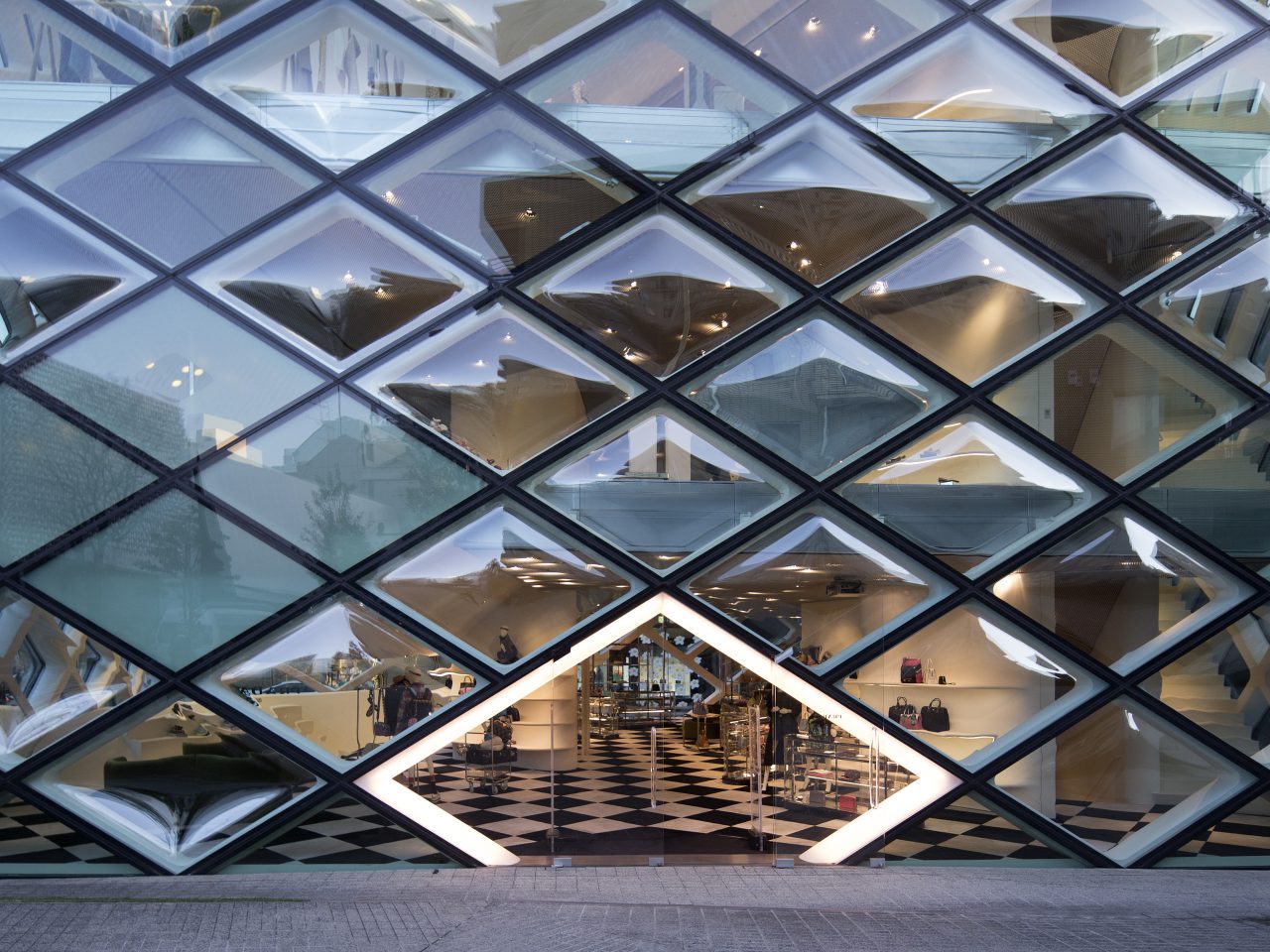
Prada Concept Store, Tokyo
Architects: Herzog & de Meuron
Facade Engineer: Eckelt Glas
Curved glass: CRICURSA | Tvitec Group
Prada’s concept store in Tokyo explores how curved glass can become both structure and branding. Herzog & de Meuron used a diamond grid and gently curved panes to create a fluid, lantern‑like volume. Eckelt Glas engineered the façade system, refining joints, supports, and tolerances for complex geometry. CRICURSA and Tvitec Group supplied the curved glass, combining lamination, bending accuracy, and coating control. Together, they delivered a façade that manages structural demands, optical quality, and retail transparency, showing how advanced curved glazing supports both performance and identity.

As the Editor of FacadeToday.com, I merge my passion for Design, Architecture and Technologies with three decade of experience collaborating with entrepreneurs across many industries. My career has centered on fostering innovation, scaling business opportunities, and bridging gaps between technical experts, business developers, and creative visionaries. I thrive at the intersection of sustainable solutions, material advancements, and smart technologies, curating insights on themes like energy-efficient facades, smart tech, and advanced manufacturing. With a commitment to lifelong learning, I aim to empower architects and facade engineers by translating innovations into actionable knowledge, driving the industry forward through purposeful connectivity and cutting-edge practices.