


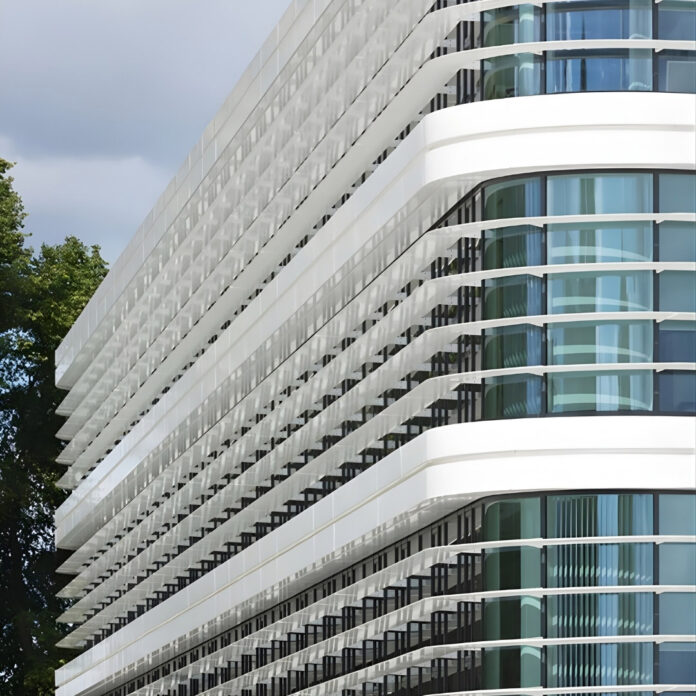
Solar shading has become a central question, as fully glazed envelopes collide with rising comfort expectations and tightening energy regulations. Uncontrolled solar gains lead to overheating, glare, and heavy reliance on mechanical cooling. This undermines occupant wellbeing and overall building performance. Conversely, well‑designed shading filters and redirects sunlight. Well‑designed shading filters and redirects sunlight. It stabilises temperatures, cuts glare at workstations, and preserves views. Often it does so with a smaller energy and material footprint than mechanical systems. By shaping how, when, and where solar radiation enters a building, shading systems turn the facade into an active environmental interface. Facade Today explores this crucial topic for high‑performance envelopes in detail.
This article opens the discussion. It will be followed by a dedicated article on smart glass as a solar‑shading solution. It will examine how tunable glazing, dynamic tinting, and integrated controls can take over roles of external shading devices.
Sun‑Wise Architecture Through the Ages
From Intuitive Solar Shading to Data‑Driven Design
Solar shading may sound very “high‑tech” today, but it has a long history in vernacular architecture. For centuries, builders in harsh climates have used deep balconies, mashrabiyas, arcades, and narrow streets to filter sun, protect from glare, and create cooler microclimates. These vernacular responses offer powerful lessons for today’s high‑performance envelopes and remind us that many contemporary strategies stand on very old shoulders.
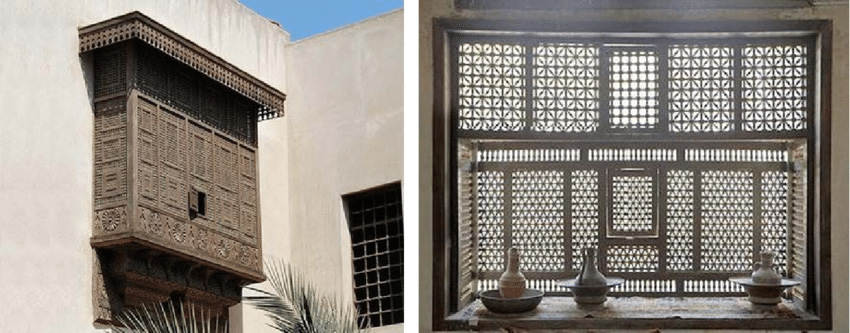
Yasmin Mounir, in Modern Mashrabiyas with High-tech Daylight Responsive Systems – ResearchGate
Image: courtesy of Yasmin Mounir
Effective solar shading has always started with understanding how the sun moves. Solar geometry, orientation, and seasonal paths remain non‑negotiable design fundamentals. Fortunately, engineers, architects, and product manufacturers speak a shared technical language: SHGC or g‑value, U‑value, daylight factor, and other common metrics. This makes it easier to align comfort, energy performance, and facade expression.
But obviously, numbers alone are not enough. There is a growing need to embed these parameters into shared digital environments, so shading logic, climate data, and product properties live together rather than in silos. Integrated information models and collaborative platforms allow teams to test options and update choices in real time.
Shadows by Hardware, Software, and Form
Solar Shading in Three Acts
Fixed external shading systems are the workhorses of solar control. Overhangs, vertical fins, brise‑soleil, and perforated screens block high summer sun while preserving winter gains and outward views. They can be simple, robust, and low‑maintenance, with clear upfront costs and predictable performance. However, they cannot adapt to changing use patterns, weather, or future climate shifts. Poorly proportioned elements may darken interiors or feel visually heavy. At their best, these systems do double duty: they optimise solar control and also enrich architectural expression through depth, rhythm, shadow play, and material contrast on the facade.
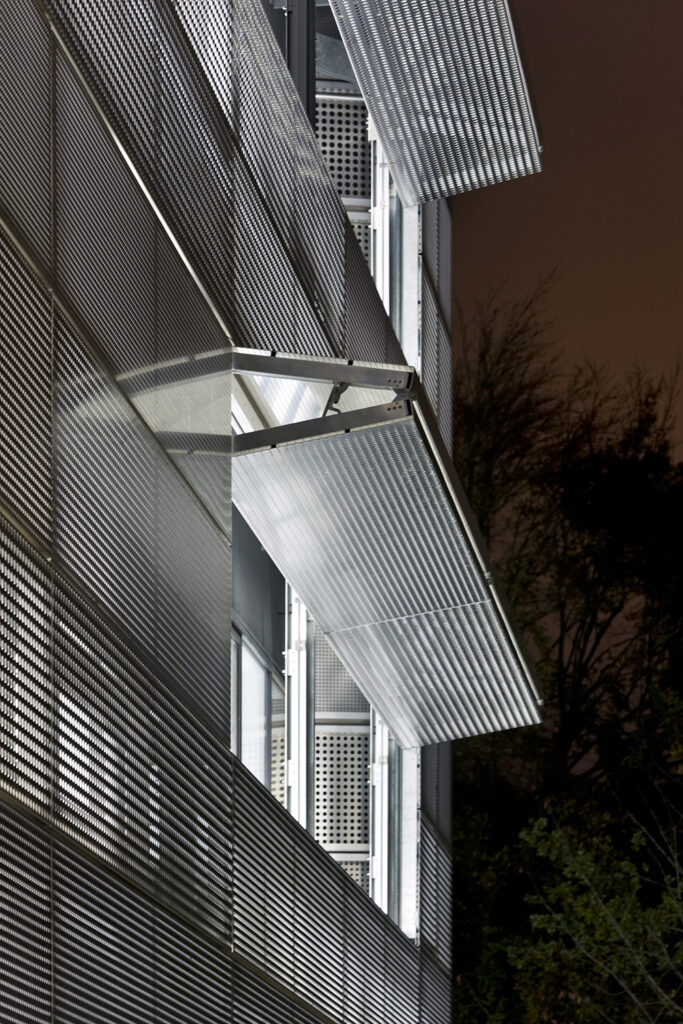
Architects: Nickl & Partner Architekten
Photography: courtesy of Nickl & Partner Architekten
Dynamic Shading for Happier Users
Dynamic solar shading solutions move with the sun and with user needs. Operable louvers, external blinds, and kinetic facades adapt their position or geometry during the day. Luckily, the market already offers a huge spectrum of options, from BIPV and IoT‑packed systems to beautifully crafted custom pieces.
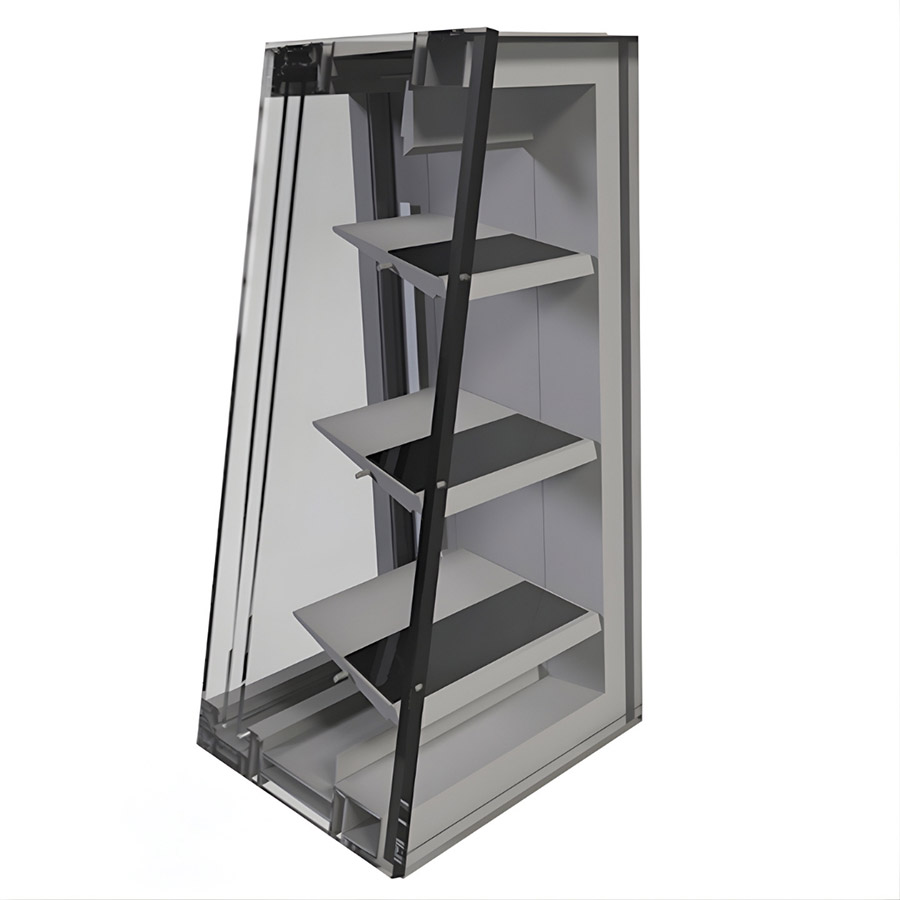
Control strategies are obviously critical. Sensors read daylight levels, solar radiation, wind, and occupancy. Signals then feed local controllers or a building management system that adjusts groups of devices. After all, it is about finding the right balance between facade design, user comfort, energy efficiency, implementation cost, and long‑term ease of management, correct?
But do not be mistaken: relying only on technical elements can easily backfire. Systems that move too often or ignore user preferences quickly become irritating. Occupants still need clear, simple overrides to keep control of their space and feel that “smart” shading really works for them.
And now, Facades That Shade Themselves
Self‑shading facades use form itself as protection from the sun. Massing, overhangs, loggias, and deep reveals are shaped so that parts of the building cast shade on others. Folding geometries, faceted planes, and rotated panels modulate exposure across the day while preserving views and daylight. Parametric design tools make this approach far more precise. Designers can link geometry to solar angles, climate data, and performance targets. Iterative simulations then test thousands of variations, optimising depth, tilt, and spacing for each orientation. In the best cases, architectural expression, comfort, and energy efficiency emerge from the same geometric logic.
This topic was already explored in a previous Facade Today article featuring a beautiful self‑shading case study in Arizona (The Arizona State University Health Futures Center by CO Architects and Advanced Structural Engineering, still one of our all‑time favourite in the desert.)
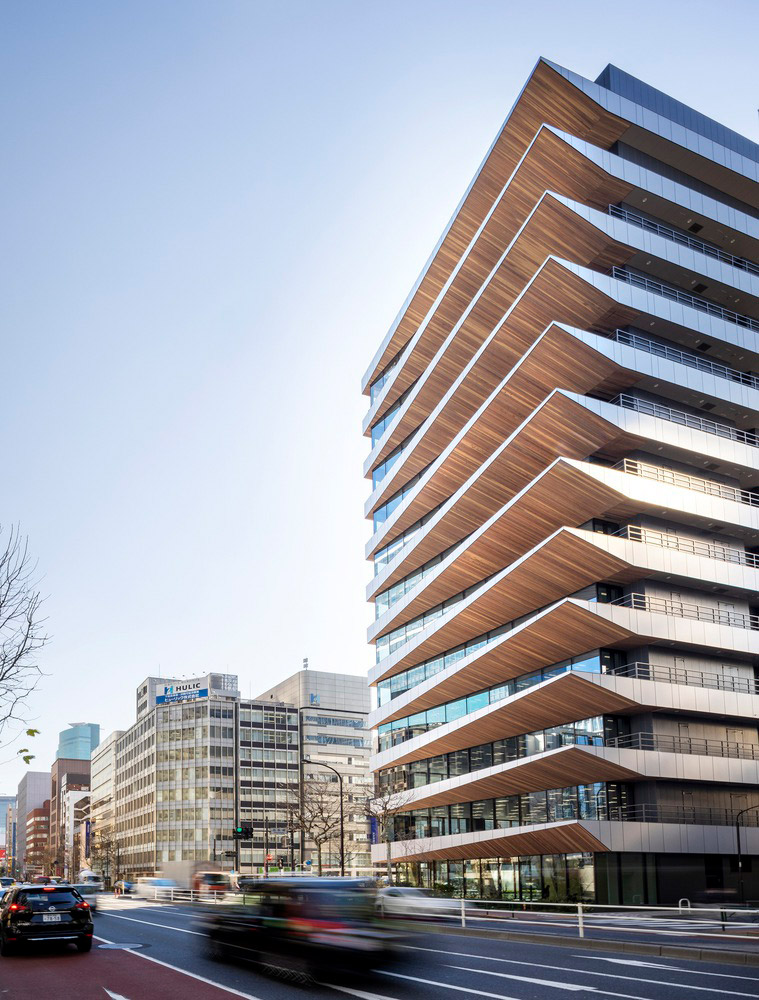
Architects: Nikken Sekkei
Photographs: Gankohsha, Kenya Chiba, Nikken Sekkei
Daylight First, Overheating Last
Integrating shading with glazing and daylighting is all about balance. Too much shading kills views and daylight; too little creates glare and overheating. The goal is a calm, bright interior with limited cooling loads. That means lining up glass properties, shading geometry, and interior layout from the start. Low‑e and solar‑selective coatings help cut unwanted gains while keeping plenty of visible light. They work best when shading keeps direct sun off the hottest panes. Daylight‑redirecting elements can then push light deeper into the floor plate: think angled blinds, light‑shelves, prismatic films, or structured glazing.
It is worth double‑checking the actual daylight properties of each glazing type. And whenever things get tricky, it really helps to bring a daylight expert on board early to fine‑tune glass choices, shading layouts, and finishes.
As mentioned in the introduction, a follow‑up article will explore smart glass and its impressive solar‑shading capabilities.
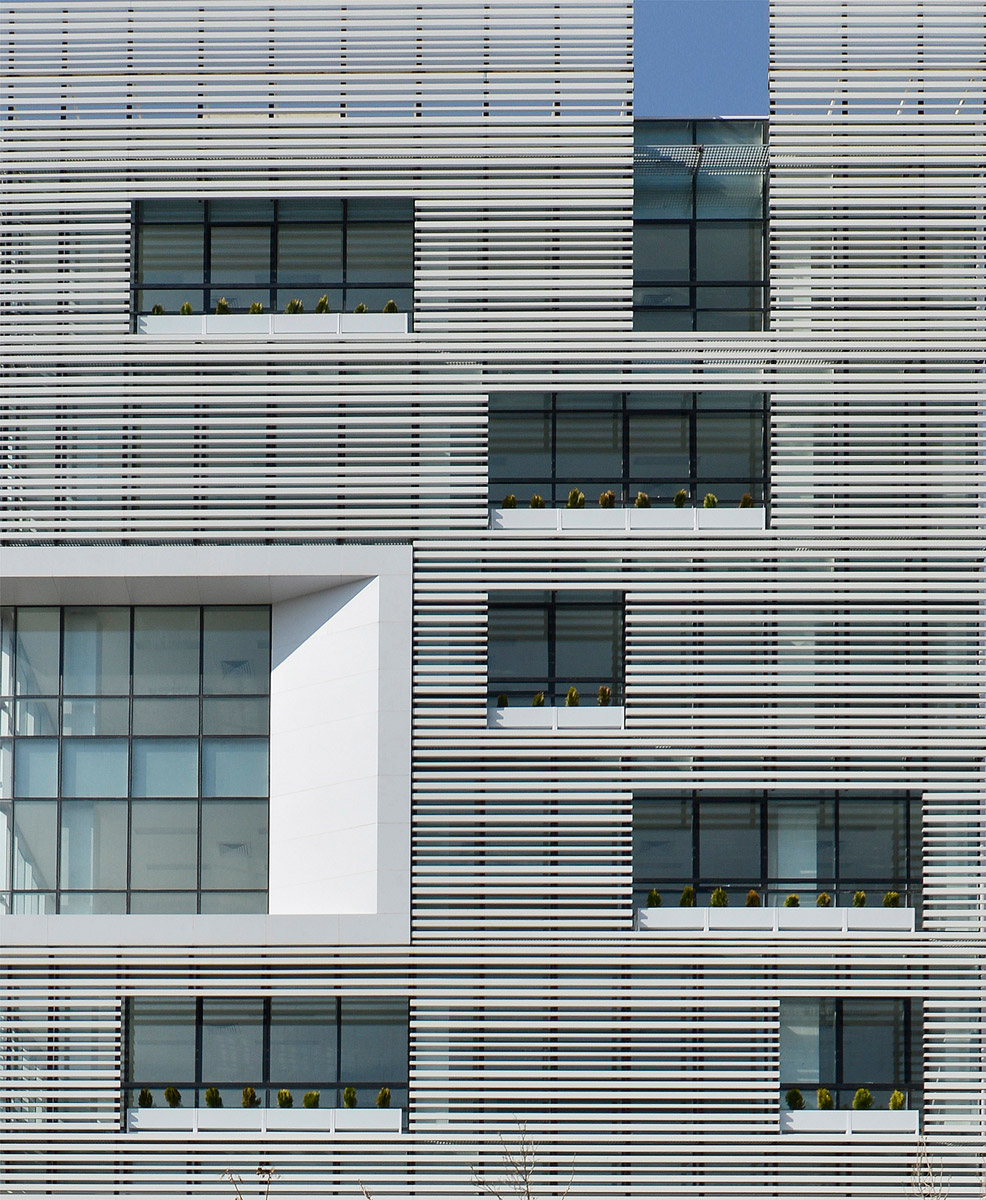
Architects: BNS Studio
Photography: Farshad Kazerooni – Azin Soltani
Metrics, Models, and the Design Loops:
Simulate, Adjust, Repeat, and Never Regret
Welcome to the performance‑driven age! Climate‑based daylight modelling now predicts lux levels, glare risk, and daylight autonomy over a full year. Thermal simulations estimate cooling loads, peak gains, and comfort hours for alternative facade options. Ideally, these tools come in very early, while massing, window ratios, and shading concepts are still flexible. Parametric workflows then link shading geometry to targets, so depth, spacing, and orientation can be tuned quickly.
Of course, performance on paper is only half the story. Complex systems must stay reliable, be cleanable, and remain safe to maintain for decades. Wind, dust, snow, and soiling all affect real behaviour. User comfort is just as critical. People accept some glare but dislike constant movement or opaque controls. Interfaces should be simple, with clear feedback and easy overrides. And as usual when design meets engineering, operations, maintenance, and user perception have to be considered from day one if solar‑shading strategies are to work in real life, not just in simulation.
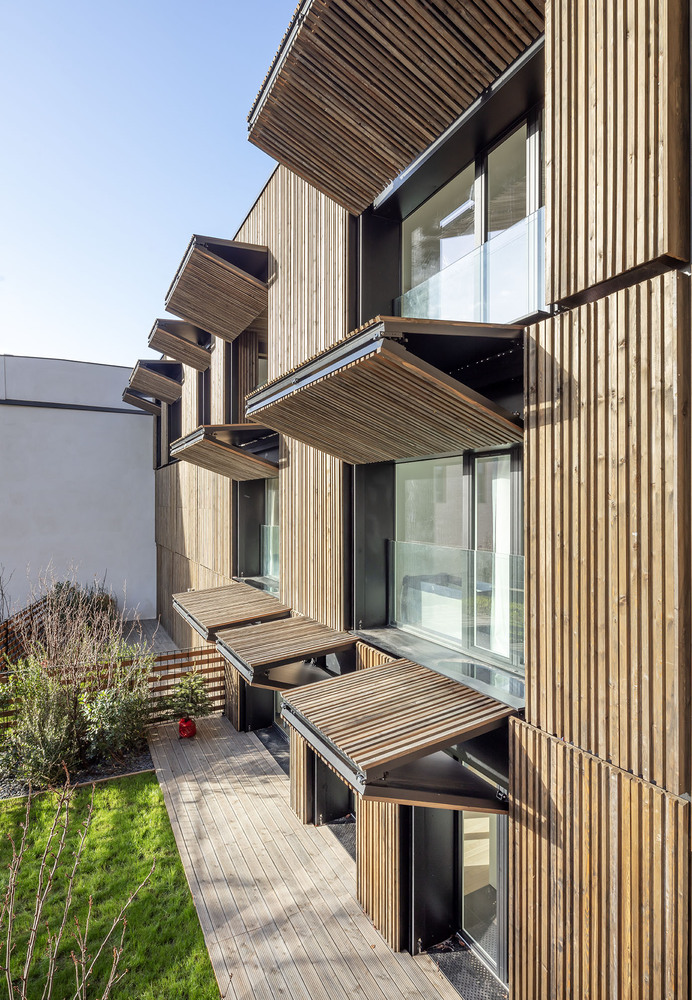
Architects: AAVP Architecture
Photography: Luc Boegly
Conclusion: The Next Energy Upgrade is the Façade
Solar shading is also evolving fast at the frontier of research. Adaptive materials shift opacity, color, or reflectance in response to temperature or light. Smart glazing and climate‑responsive skins modulate gains without heavy mechanics. Many promising ideas still sit in labs or pilot projects: bio‑based responsive films, 3D‑printed shading membranes, AI‑driven kinetic facades.
One inspiring example is the SOMBRA pavilion, which uses simple heat‑expansion mechanisms to move shading elements with zero operational energy. Another emerging route is a foil‑based system that acts as a dynamic thermal protection layer for windows and transparent facades, boosting comfort and efficiency without bulky hardware. Together, such concepts hint at a future where solar control is lighter, more integrated, and finely tuned to each context.
Innovation Highlights

The SOMBRA pavilion, the ode to the sun
SOMBRA Pavilion is a research prototype that explores zero‑energy dynamic shading. It was developed by researchers from Airshade, Alumet, MVRDV, and Metadecor Architects. The pavilion uses simple heat‑expansion mechanisms embedded in slender metal elements. As temperature rises, these components expand and trigger the rotation of shading petals. When the air cools down, the system naturally returns to its initial position. No motors, sensors, or external power are required. Sombra delivers a poetic, climate‑responsive canopy that shows how material intelligence alone can drive dynamic solar control in future facades.
Archello Awards 2025 – Winner Public Vote, Temporary Pavilion of the Year category
ECC Award 2025 – Shortlisted, Design Project category
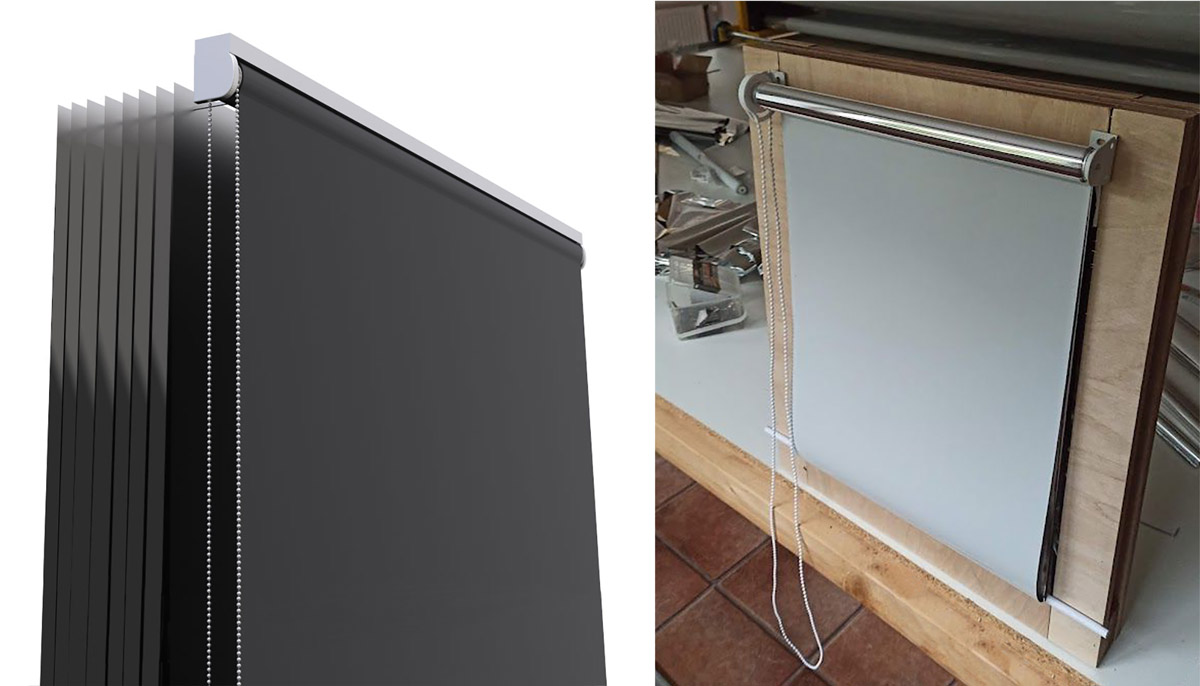
Multi-Layer-Insulation (MLI) foil‑based system
German inventor and entrepreneur Sergej Kvasnin (i-n-solation) adapts space technology to building facades. His foil‑based dynamic thermal protection system uses multi‑layer insulation, originally developed for satellites and cryogenic storage. It now works as a slim “insulating blind” for windows and transparent facades. Several foil layers create air chambers that sharply reduce heat losses while staying lightweight and flexible. The system can be retrofitted on existing buildings or integrated into new facades without bulky hardware. Residents feel less cold at the window and enjoy higher comfort. Architects keep large glazed areas without the same energy penalty, and energy planners gain a new lever for load reduction and refurbishment.
Both projects are actively looking for partners for dialogue, pilot projects, and collaborations. From facade construction and architecture through to municipal heat‑planning stakeholders.
Useful links
Gallery of New Trianel Headquarters, Aachen, Germany, by gmp Architects
Helmholtz-Institute for Electrochemical Energy Storage HIU, University of Ulm, Ulm, Germany, by Nickl & Partner Architekten
PV Louver in Double Skin Facade, by SmartCon
Gallery of Ginsen Nishi Shimbashi Building, Minato City, Japan, by Nikken Sekkei Architect
Galerie of Tolbiac, Paris, by AAVP Architects
White Office Building, Tehran, Iran, by BNS Studio Architects

As the Editor of FacadeToday.com, I merge my passion for Design, Architecture and Technologies with three decade of experience collaborating with entrepreneurs across many industries. My career has centered on fostering innovation, scaling business opportunities, and bridging gaps between technical experts, business developers, and creative visionaries. I thrive at the intersection of sustainable solutions, material advancements, and smart technologies, curating insights on themes like energy-efficient facades, smart tech, and advanced manufacturing. With a commitment to lifelong learning, I aim to empower architects and facade engineers by translating innovations into actionable knowledge, driving the industry forward through purposeful connectivity and cutting-edge practices.