

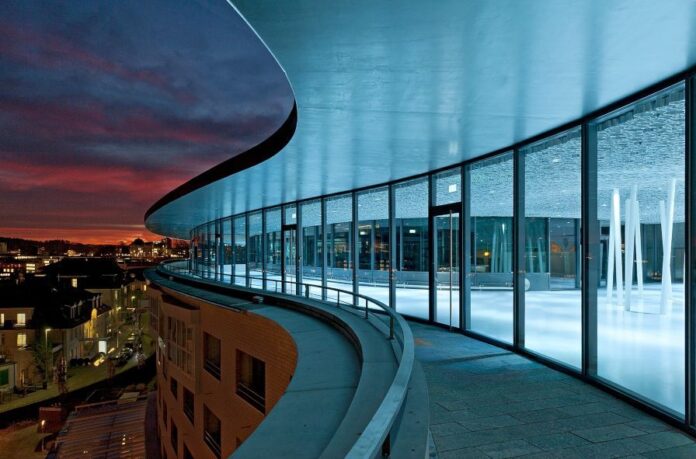
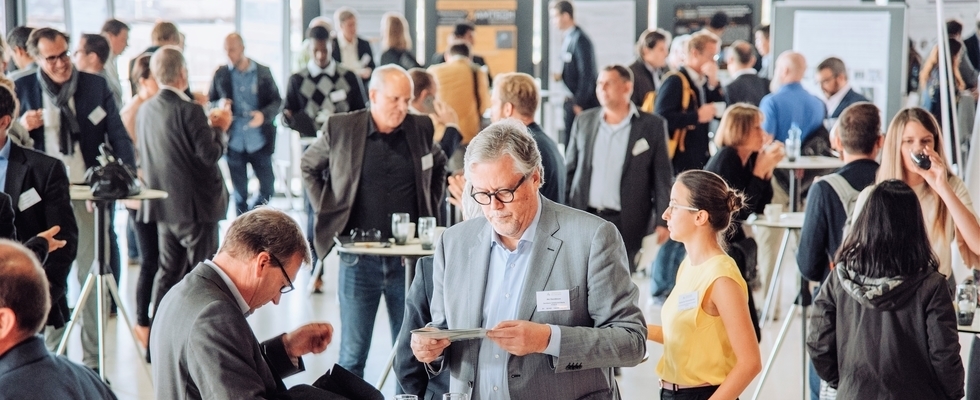
The 21st Advanced Building Skins Conference & Expo takes place in Bern on 3–4 November 2026. The conference brings together developments in artificial intelligence, glass, solar integration and building renovation. Curated by Andreas Karweger, the programme examines how new technologies can translate into better-performing envelopes. As part of its wider coverage of major façade events, Facade Today joins ABS Bern as a media partner. We share discussions and insights to an international audience of architects and façade professionals.
The façade is where many of architecture’s competing demands meet. Transparency must be balanced with solar protection, material efficiency with durability, and architectural ambition with manufacturing constraints. Adding electricity generation, adaptive behaviour and whole-life carbon assessment makes the task more complex, and potentially more productive.
ABS Bern 2026 will explore these relationships across six sessions, moving from digital design to materials, engineering and retrofit. Its underlying question is practical: how can increasingly sophisticated building skins deliver measurable benefits throughout their working lives?


AI beyond the architectural image


The conference will open with a short presentation by Matthew Fineout of AE7, Dubai, offering a personal perspective on how the war in the Middle East is affecting his Burj Azizi project. Having had to relocate to Los Angeles for safety reasons, Fineout will discuss the conflict’s impact on his work.
In his keynote Neil Leach of Florida International University will the focus from immediate challenges to the technological future. He will examine how AI is influencing architectural creativity, design workflows and professional roles. His keynote will consider AI as an active collaborator rather than a passive tool, drawing on examples associated with Zaha Hadid, Coop Himmelblau, Foster & Partners and UNStudio.
For façade specialists, the discussion becomes particularly relevant when it moves beyond image generation.
The next presentations explore how AI connects with site information, embodied-carbon assessment, environmental simulation and unitised construction. Thiemo Tippmann of the Institute of Architecture in Dessau will investigate how contextual data can bridge the building and its surroundings, while Michael Frederick of Gensler will explore AI-enabled workflows for climatically responsive façade systems. The emphasis is on using information to shape decisions, not simply produce more alternatives.
Manufacturing provides a necessary counterpoint. Huy Nguyen Quoc of BM Windows will discuss a curved terracotta unitised curtain wall for a Sydney project. He will examine how fabrication logic and assembly constraints enter the engineering process. Alongside the digital presentations, this contribution brings the conversation back to the coordination required between architects, engineers, manufacturers and delivery teams.
Connecting prediction with actual performance
A recurring theme is the distance between what designers predict and what buildings ultimately deliver.
Rafailia Ampla of Buro Happold will address early-stage embodied-carbon assessment through granular data and comparison frameworks. Later, Sarah Hoogenboom of Eckersley O’Callaghan will examine the gap between design-stage estimates and as-built façade carbon. Together, the presentations connect early decision-making with the need to calibrate assumptions against completed construction.
Digital twins offer another perspective. Oyku Ongoren of Istanbul Technical University will present a workflow linking responsive photovoltaic façades with panel-level generation analysis, room-level electricity demand and performance visualisation. This approach considers the envelope not merely as an energy-producing surface, but as part of a building’s wider energy relationship.
Meanwhile, Rania Labib and Eduardo Banda of Texas A&M University will compare text, sketches and annotated inputs for agentic AI daylighting simulation. Their research addresses an emerging practical issue: how the way designers communicate with an intelligent tool affects its usefulness.
Glass: freeform, control and longevity
The glass and shading session brings architectural possibilities into contact with questions of long-term performance. Bill Gao of Northglass will discuss multi-curved glass and its application to high-rise buildings. Marcus Frank of Bühler Alzenau will examine patterned coatings, large-area processing and advanced printing technologies. Both presentations investigate how manufacturing developments can broaden the designer’s palette.
But innovation is only part of the story.
Chris Davis of H B Fuller will focus on insulating-glass longevity, including performance over time, life-cycle studies and robustness. His contribution places durability beside formal and technical experimentation, a useful reminder that the success of an envelope extends well beyond installation.
Dynamic glazing and shading will bring comfort and operation into focus.
Fredrik Fränding of ChromoGenics and Daniel Moneta of Sky-Frame will discuss adaptive glazing through workplace environments in a subtropical climate and a Swiss single-family home. Giovanni Gennaro of Pellini will explore retro-reflective slats and dynamic films, addressing electrochromic windows, closed-cavity façades and climate-adaptive shading. Across these subjects, the challenge is to reconcile daylight, glare, heat gains and architectural intent.
Solar integration faces questions of scale
ABS Bern’s second day begins with building-integrated photovoltaics, examining not only technological possibilities but also the conditions for wider adoption.
Viktor Varga of Swisspearl will address the tension between customisation and market growth. His presentation compares standardised and tailored modules and considers how early collaboration can avoid late-stage compromises. For façade teams, this raises a familiar question in a new context: how much project-specific flexibility can a repeatable construction system accommodate?
Robert Roithmayr of Tensevo will propose a more fundamental change through structural photovoltaics, in which PV elements become part of the load-bearing system. Nils Adam of the University of Applied Sciences in Frankfurt will explore three-dimensional solar textiles. A promising technology, linking electricity generation with shading and lightweight construction. Michael Hoffmann of Fraunhofer will examine functionalised plastic films and pilot-production developments for flexible solar cells.
The session also addresses the less spectacular, but essential, conditions of implementation. Urs Walter Muntwyler will discuss photovoltaic façades above 30 metres, covering fire-safety guidelines, quality control, maintenance, partial shading and overheating. Energy yield, the programme makes clear, cannot be separated from the responsibilities of the envelope.
Adaptation beyond glass
Advanced façades are often associated with transparent surfaces and electronically controlled shading. The session on innovative products and technologies offers a broader picture.
Nina Wilson of Syracuse University will investigate façade-integrated flow control and enclosure pressure modulation. Kaixin Lin of City University of Hong Kong will present coloured fluorescent coatings for passive radiative cooling, including outdoor validation. These contributions explore different ways of influencing the relationship between the building surface and its environment.
Other presentations turn to materials that change behaviour. Miren Juaristi of Eurac Research will examine shape-memory alloys as silent, low-energy actuators for kinetic opaque cladding and active insulation, including life-cycle performance. Andreas Hammer of the University of Applied Sciences in Heidelberg will combine shape-memory alloys with thin-film photovoltaics for dynamic shading.
Material efficiency will also feature through Daniel Schmidig of re-fer, who will discuss slender concrete elements with memory-steel reinforcement, addressing material savings, crack control and reduced deformation. Cristina Pardal March of the Universitat Politècnica de Catalunya will examine bio-based external insulation, adaptive thermal performance and mitigation of the heat-island effect. The range demonstrates that envelope innovation can begin with material behaviour as much as with digital control.
Defining high performance more broadly
Sustainability, affordability, architectural quality and resilience converge in the afternoon’s engineering session.
Michael Garrison of the University of Texas at Austin will connect environmental performance with affordable housing, considering digital prefabrication and envelope energy costs and benefits. Joseph Jenkins of En-Habit will approach affordable homebuilding through resilience, disassembly, durability and low maintenance. These contributions extend the discussion beyond initial specification to the conditions of use and eventual adaptation.
A project-focused presentation by John Mackay and Ruth Baleiko of Miller Hull will examine façade geometry under intense desert sun. Balancing mountain views, daylight and glare, while coordinating the envelope with a mass-timber grid, their contribution illustrates how environmental and structural requirements can actively shape architecture.
Resilience introduces another dimension. Hollice Stone of Stone Security Engineering will discuss blast, drones and other extreme hazards, including the challenges of protective façade systems. Shorter presentations will address commercialisation, life-cycle carbon, dynamic double-skin façade measurements and coordinated load and energy assessments. The session’s strength lies in treating performance as a balance of responsibilities rather than a single metric.
From research to delivery
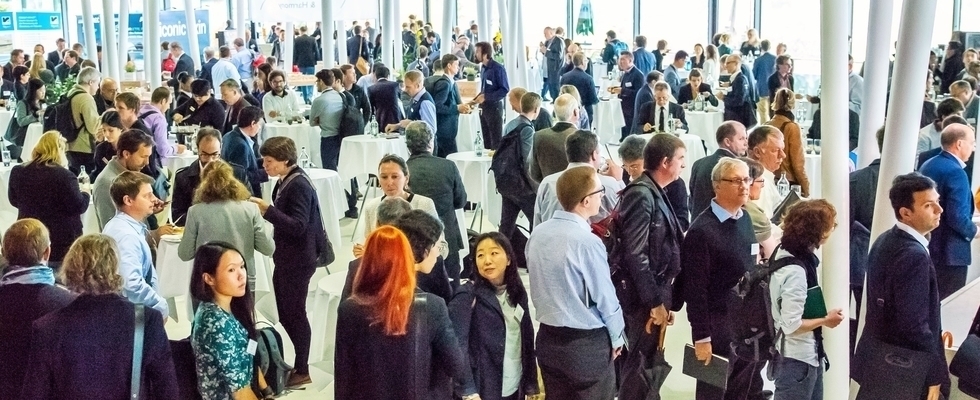
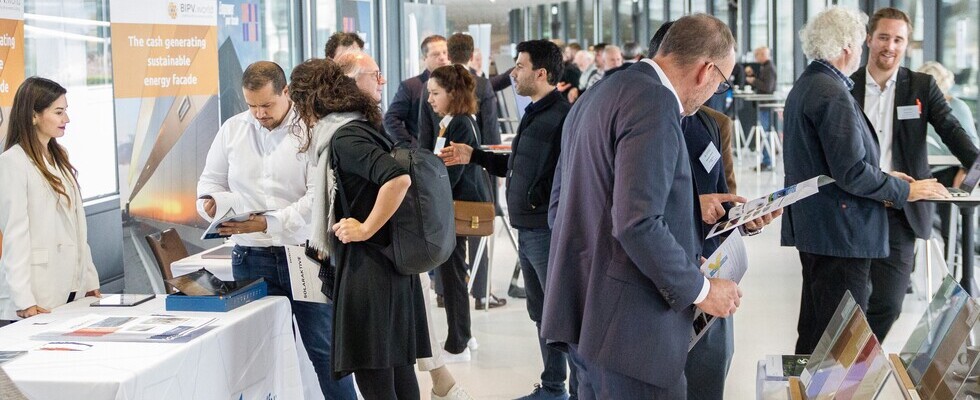
ABS Bern is more than a conference. The exhibition will provide a parallel setting for discussions with suppliers and technology developers. The published plan includes NorthGlass, Pellini, Bühler, Swisspearl, Lanik, Fraunhofer, Solarix, Metsolar and Kömmerling, among others. An evening reception on 3 November will extend the opportunities for exchange beyond the conference sessions.
For façade professionals, ABS Bern 2026 offers a forum to explore the transition from promising technology to coordinated, buildable and lasting envelope solutions. As a media partner of major façade events, Facade Today brings these discussions to a wider professional audience. Through interviews with industry professionals and in-depth editorial coverage, we connect innovation, expertise and knowledge with architects and façade engineering practices, encouraging exchange between research, industry and design.
For more information and the practical details:
https://abs.green/home
Are you organizing an event related to façade design, smart materials, sustainable construction, or architectural innovation?
Let’s talk! We’re always open to media partnerships that align with our editorial mission and bring value to our readers.
Reach out to us at editor@facadetoday.com
We’d love to hear about your event.