

Venice will host a concentrated three-day discussion on the future of façade design with Performance-Based Façade Design (PBFD) 2026 taking place from 16 to 18 September. The opening seminar will focus on durable façades, bringing together architects, engineers, researchers and façade specialists to examine how building envelopes age, fail, adapt and retain value over time.
Rather than treating durability as a narrow technical metric, the program will explore it as a combination of material performance, design intelligence, maintenance, digital continuity and climate resilience. That approach will define a day of presentations that move from the theoretical to the practical, and from experimental research to built case studies.
A seminar on durability
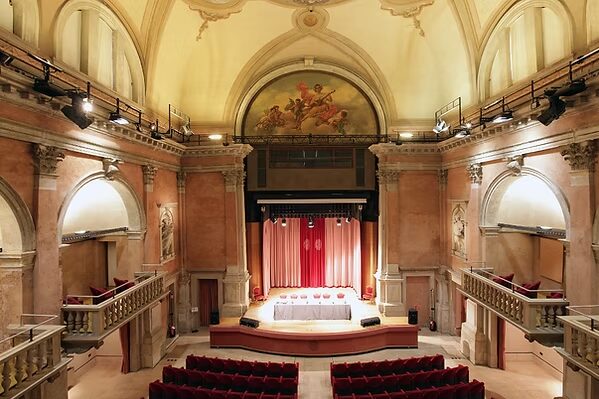
The first day will open at the Auditorium Emanuele Severino in Venice, with PBFD founder and curator Angela Mejorin introducing the themes of the conference and the first PBFD book published in the Springer Nature series. She will co-moderate the seminar with Mikkel K. Kragh, of Arup, PBFD advisor and co-chair.
The keynote program will begin with Silvia Prandelli of Populous Architects, who will discuss façades as “living buildings” for the entertainment industry, where external skins must respond to use, climate and atmosphere in real time. Greg Simmons of Insol will then turn to testing, arguing that porous façades need serviceability methods that go beyond conventional static checks.
Shorena Gudzhabidze of Staticus will broaden the durability debate by focusing on digital continuity, making the case that a façade can lose value when its information is lost, even if the materials remain intact. Nebojsa Jakica of the University of Southern Denmark will challenge standard circularity narratives with a proposal for façades that gain meaning through visible ageing, adaptation and repair rather than permanence.
The session will continue with Balázs Bognár of Kengo Kuma & Associates, who will reflect on time, making and craft as essential dimensions of architectural endurance. Later in the day, Timothy Soebroto and Triadi Bagus Gumilar of Meinhardt Façade Technology will examine degradation as a design condition rather than a defect, especially in climate-heavy Southeast Asian contexts.
From climate to carbon
Climate adaptation will be another major thread. Michael Lacasse of Concordia University will connect façade service-life research to climate change, showing how future temperature and moisture patterns may force a rethink of durability models.
In the afternoon, Astrid Piber of UNStudio will present façade design as an integrated intelligence system, while Eric Claeys of Fassada will frame façade decisions as a direct lever for carbon reduction and real estate value.
The seminar will also include a series of practice-based papers. Tony Cinnamon of WJE will present experimental research on vacuum insulating glass.
Francesca Vagliani of Covivio will compare refurbishment and new-build strategies through two Italian projects. Carl Knutson of Perkins&Will will address the challenge of renewing mid-century educational buildings.
The afternoon will then move toward long-term evidence and rehabilitation. Vedran Skopac of Reimagine Architects will share ten years of performance data from the Mosaic Centre in Edmonton’s harsh climate, while Giovanni John Diodati of Giovanni Diodati Architecture will reflect on decades of building envelope rehabilitation in Canada.
The day will close with remarks from Angela Mejorin, who will hand the conversation over to the workshop on façade serviceability.
Day 2: lessons from failure
The second day of PBFD 2026 will shift the focus from durability in principle to serviceability in practice. The workshop, titled Façade Serviceability: Failures and Lessons Learned, will examine how façade systems behave once they are in use, where problems emerge, and why apparently small coordination issues can lead to costly performance failures.
The day will open with Angela Mejorin, PBFD founder and curator, together with Daniel J. Lemieux, of WJE, PBFD advisor and co-chair. The morning keynote will be delivered by Andrei Koshelev of ETH Zurich, who will speak from the client’s perspective, stressing the need for façades that are economical, reliable, easy to maintain and straightforward to repair over the long term.
The technical sessions will then move into practical problem-solving. Luigi Pagnoncelli of Mapei will look at low-carbon retrofit solutions that extend façade life without major demolition, while William MacDonald and Marco Biancospino of GL&SS will examine why façade systems fail in practice and how disputes often arise from incomplete information, late changes and misaligned responsibilities.
Performance under environmental stress
Fire safety will also be in the spotlight. Angie Ogino of Thermafiber will discuss high-rise fire spread and perimeter fire containment, linking lessons from real fire events to ASTM E2307 testing. Brandon Andow of HKS will argue for mockups and preconstruction testing as essential risk-management tools, and John R. Medina of Miami Curtain Wall Consultants will present a traceability-driven method for reading long-term serviceability through decades of field investigation.
Later in the day, the program will continue with Matthew Glanville of CPP Wind, who will address façade performance under wind actions, especially for designs that include operable openings, balconies and permeable systems. Niall O’Sullivan of Windtech will explore double-skin façade design and testing, while Gordon Shepperd and Noah Doukas of Secretariat will look at the gap between façade design intent and whole-building airtightness performance.
The afternoon will become more strategic with Massimo Colomban, who will deliver a keynote on building Permasteelisa Group into a global façade leader through engineering excellence. The workshop will be ending with a book launch and closing remarks by Angela Mejorin.
Day 3: Venice beyond the conference room
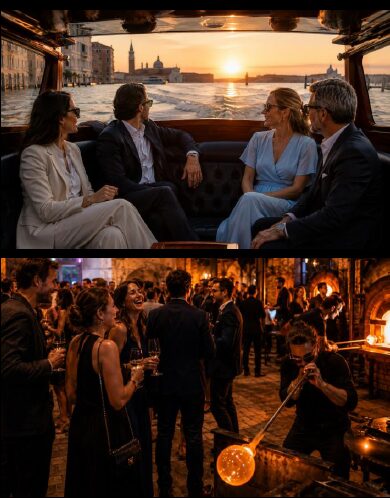
The third day of PBFD 2026 will move beyond the auditorium and into Venice and the Veneto region, with curated off-site activities combining architecture, craftsmanship, landscape and networking.
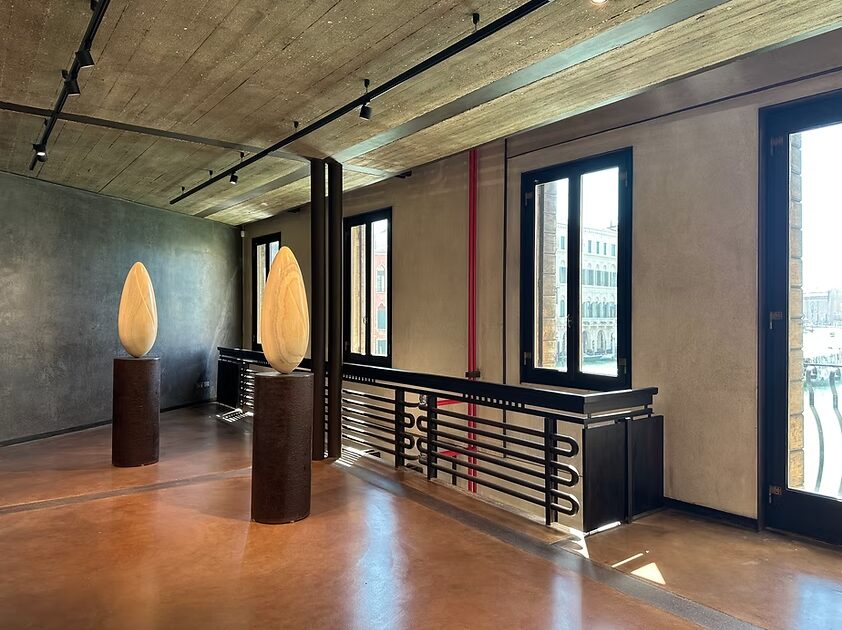
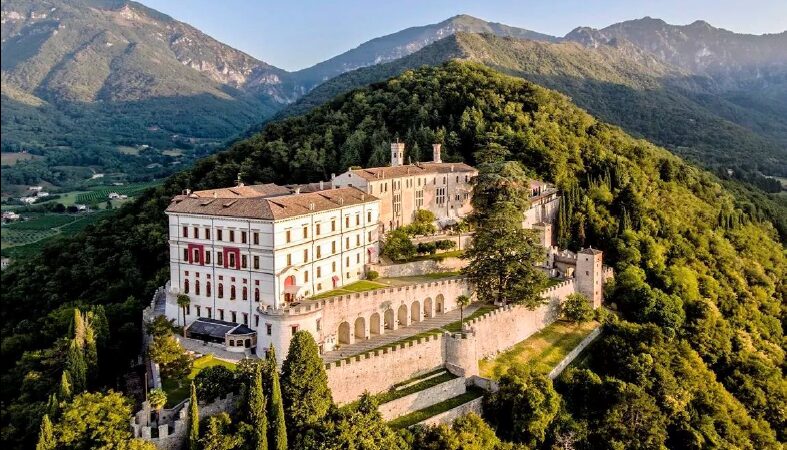
Participants will be able to choose between three experiences: the Orsoni Furnace Tour, focused on mosaic craftsmanship and architectural glass; Palazzina Masieri, with its Scarpa-Wright architectural dialogue and the Reflections on Brancusi exhibition; and CastelBrando, which will pair a visit to the castle with wine tasting, lunch and panoramic views in the Prosecco Hills.

Final reflection
PBFD 2026 will therefore be more than a seminar on technical performance; it will be a snapshot of where the façade industry is heading. Across the day, the speakers will point to a field that is becoming more interdisciplinary, more data-driven, and more explicit about the long-term consequences of design decisions. Durability, in this context, is no longer a passive quality measured only at handover. It is something that must be designed, tested, documented and revisited throughout the life of the building.
That shift matters because façades sit at the intersection of architecture, engineering, climate responsibility, asset management and user experience. A façade that performs well in the lab but fails in service is no longer acceptable, just as a technically sound envelope that loses its knowledge base over time becomes harder to maintain, repair and value. The program in Venice reflects that reality by combining research, client perspective, developer thinking, testing methods and built case studies into one single approach.
The New Logic of Durability
It also suggests that the next generation of façade practice will depend on collaboration across the entire lifecycle of the envelope. Designers will need to think earlier about ageing, interfaces, repairability and digital continuity. Developers will need to consider durability as part of long-term value rather than an afterthought. And researchers will continue to supply the data and frameworks needed to connect climate change, material behaviour and serviceability in meaningful ways.
In that sense, PBFD 2026 will not simply showcase good presentations. It will underline a broader industry transition: from façade design as a finishing discipline to façade design as a long-term performance strategy.
Practical information
Dates: 16–18 September 2026.
Main venue: Auditorium Emanuele Severino, Campo Santa Margherita, Dorsoduro 3689, 30123 Venice, Italy.
Off-site activities: Venice and the Veneto region, including CastelBrando, Palazzina Masieri and Orsoni Furnace.
Registration: performancebasedfacadedesign.org/2026
Facade Today is Media Partner of Performance-Based Facade Design 2026.
As part of this partnership, Facade Today supports the event with editorial coverage, digital visibility, and content amplification, helping ideas travel further across the facade engineering and architecture community.
Are you organizing an event related to façade design, smart materials, sustainable construction, or architectural innovation?
Let’s talk! We’re always open to media partnerships that align with our editorial mission and bring value to our readers.
Reach out to us at editor@facadetoday.com
We’d love to hear about your event.